
How to Adapt Two-Wheeler Fleets for Battery Swapping Networks
2026-08-05
Quick Answer: Different electric two-wheelers can share a battery swap station only when their vehicle, battery, and station configuration have been approved to work together. Interoperable battery swapping creates a controlled way to add those qualified configurations to one network. It does not mean that any removable battery can be used in any vehicle or cabinet. At HelloSwap, we help partners turn approved compatibility into a network that can be operated, expanded, and supported with confidence.

A battery may fit a vehicle, connect to a cabinet, and still be unsuitable for a shared network. Physical fit is only one condition. A workable system also needs matching electrical behavior, trusted communication, and operating rules that govern how approved assets are used.
This broader view aligns with the direction of battery-swap standards. IEC 62840-1:2025 addresses functional, interface, data, and operational interoperability, rather than treating interchangeability as a mechanical issue alone.
Interoperability Area | What It Means in Practice |
Functional | The battery, vehicle, and station can complete their intended functions safely in an approved configuration |
Interface | Mechanical, electrical, and communication connections are defined and validated |
Data | The system can recognize approved assets and interpret the information needed for operation |
Operational | Access, charging, service, and exception rules are applied consistently across the network |
The first three areas establish whether a configuration can work. The fourth determines whether it can be operated reliably at network scale.
Yes, but they are not universal by default. Different electric two-wheelers can only share a station when their specific vehicle, battery, and cabinet combination is validated across the four areas mentioned above.
Interoperability is about approved compatibility at network scale, not unrestricted battery sharing. This controlled approach gives fleet operators and mobility platforms a secure way to support multiple vehicle programs without compromising safety or asset control.

A technically connected asset still needs a clear operating role. When a battery enters a cabinet, the network must determine whether it is recognized, whether its reported condition permits charging, and whether any restriction or inspection process applies. When a battery is issued, the system must apply the relevant authorization and operating conditions for that program.
A reliable interoperable network resolves four decisions before launch, and revisits them as the network grows:
Decision | What the Network Defines | Business Value for Operators |
Admission | Which battery and vehicle configurations are approved, and under what conditions | Keeps expansion within known, safe operating limits |
Access | Which stations, users, and commercial arrangements apply to each program | Supports controlled use across different fleets or customer groups |
Responsibility | Who manages service, maintenance, updates, and exception resolution | Avoids operational uncertainty after launch |
Continuity | How a program can be adjusted, expanded, suspended, or retired | Protects the wider network infrastructure as market needs change |
This structure matters most when a network supports more than one operating model. A delivery fleet partner may need controlled access for its riders, while another partner may require an independently branded customer experience. The underlying network must support both without conflicting rules or unclear responsibilities.
A credible interoperability strategy has limits. It does not mean:
Every electric scooter or motorcycle can use the same swap station
Every battery with a similar voltage can be charged by the same cabinet
A connector change alone qualifies a vehicle for a shared battery pool
Any third-party asset can enter the network without validation
All users, fleets, or partners must operate under identical access and commercial rules
A configuration that works in one demonstration is ready for broad fleet deployment
Industry work on swappable motorcycle batteries focuses on common specifications for voltage, geometry, connectors, and vehicle interfaces. These efforts demonstrate the value of common foundations, but they do not remove the need to validate each configuration and define how it will be managed once deployed.
Before deploying vehicles into a shared swap network, a fleet operator or vehicle provider should get direct answers on the four decisions above, applied to their specific program:
Which of their vehicle and battery configurations the network currently approves, and what would be required to approve a new one
Which stations, rider groups, and commercial terms would apply to their fleet
Who is accountable for maintenance, service escalation, and component replacement once live
How the program would be monitored after launch, and what process exists to scale, adjust, or exit it
Clear, specific answers indicate that interoperability has been built as an operating capability. Vague assurances of "full compatibility" usually mean these questions have not been addressed yet.
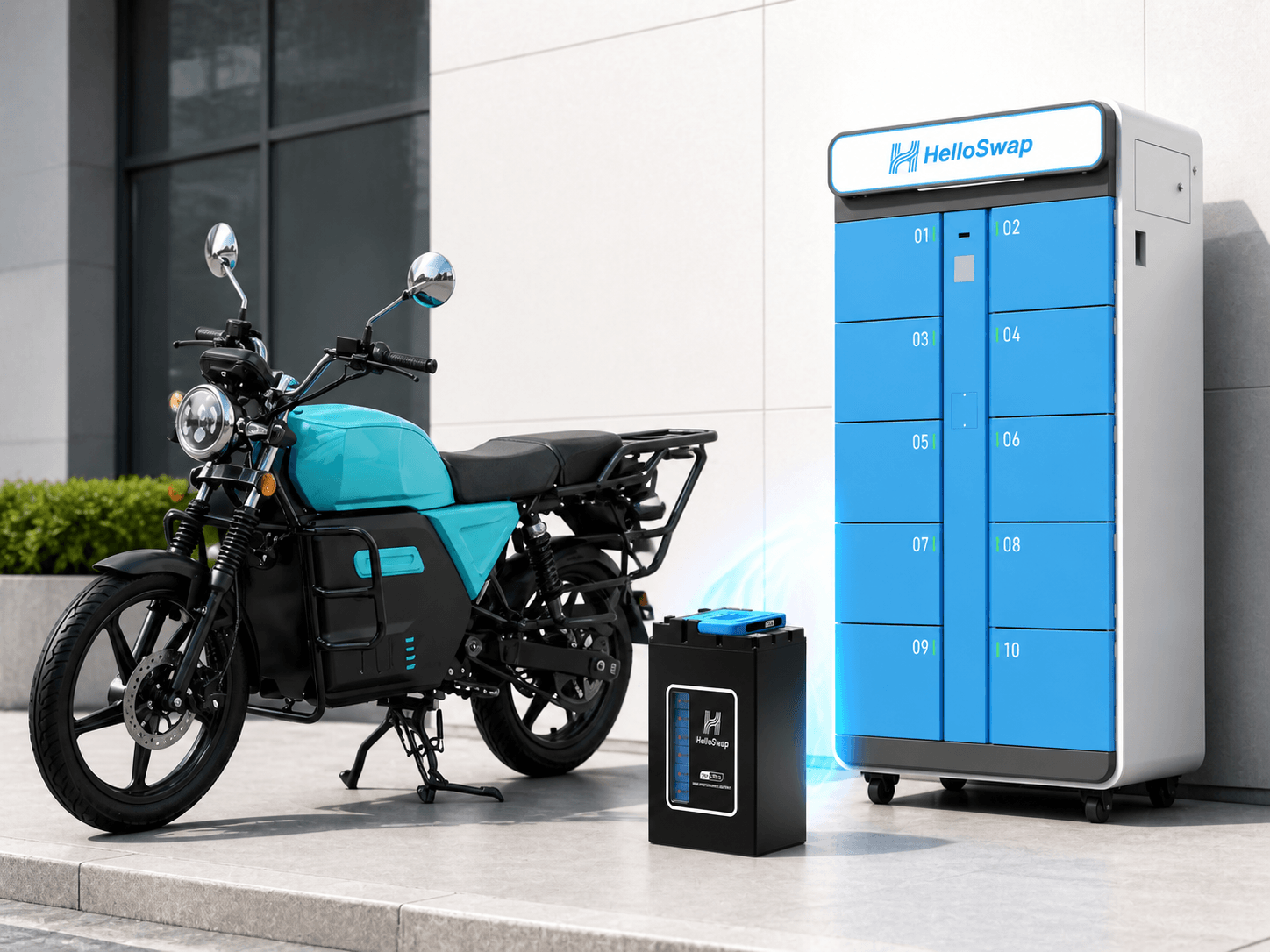
HelloSwap turns approved compatibility into an operating model. We align the battery platform, swap cabinet, vehicle connection, user access, and service responsibilities before deployment, so each approved configuration has defined operating boundaries from day one.
Partners with an existing vehicle fleet can work with HelloSwap on a structured adaptation path for a qualified model. Where a partner requires a coordinated vehicle option, we align the vehicle, battery platform, cabinet configuration, and operating setup as one approved solution. Both routes are designed to avoid one-off integrations and support consistent expansion as the network grows.
Our integrated solution combines smart batteries, swap cabinets, vehicle connectivity, rider applications, operations software, and after-sales support. This gives partners one connected foundation for managing approved configurations, rather than separate products with unclear ownership or operating rules.
Start with the configuration you plan to operate: your vehicle resources, battery platform, target users, and network model. HelloSwap helps translate these inputs into an approved deployment plan with aligned infrastructure, operating rules, and service responsibilities—from project planning and deployment to ongoing operations. Our capabilities draw on Hello Inc.'s mobility operating experience, Ant Group's digital capabilities, and CATL's battery technology and safety expertise.
Contact Us
Location
2F, Building 1, No.898 XiuWen Road, MinHang District, Shanghai, China
Copyright © 2024 福建宁德惠智无限科技有限公司 All Rights Reserved. 闽ICP备2023025900号-3.


