How Battery Swapping Startups Can Scale Faster by Partnering Smart
2026-05-08
The electric two-wheeler energy market is moving fast, and the infrastructure buildout is already underway across Asia, Africa, and Latin America. For investors evaluating where to put capital in the EV space, battery swap stations for two-wheelers offer something most clean energy plays do not: a revenue-generating asset that serves a proven, high-frequency user base from day one. But the returns are not automatic. They depend on understanding the mechanics behind the model before you sign a lease or place a hardware order.
This article is written for distributors, franchise operators, urban mobility entrepreneurs, and infrastructure funds who are seriously considering entering this space. It covers what the economics actually look like, which risks are worth taking seriously, and what separates operators who scale from those who stall.
Three forces are converging in 2026 that make battery swap infrastructure for two-wheelers a particularly well-timed investment.
Two-wheeler electrification has passed the early-adopter phase in the world's largest markets. Indonesia alone has over 112 million motorcycles on the road, and government policy across Southeast Asia is actively pushing EV adoption through fuel subsidy reform and fleet electrification mandates. India's last-mile delivery sector is drawing substantial swap investment. Vietnam's EV scooter market accelerated sharply in 2025, with major networks rolling out at scale. These are mass adoption curves already in motion, not pilot programs waiting for a green light.
The delivery economy has also made energy reliability a commercial-grade requirement. Gig platforms running food delivery, courier services, and ride-hailing operate on margins where vehicle downtime cuts directly into driver income. A rider waiting three to seven hours for a battery to charge is a rider not working. A swap that takes under 60 seconds means almost no time lost to refueling, which matters enormously for someone running 80 deliveries a day.
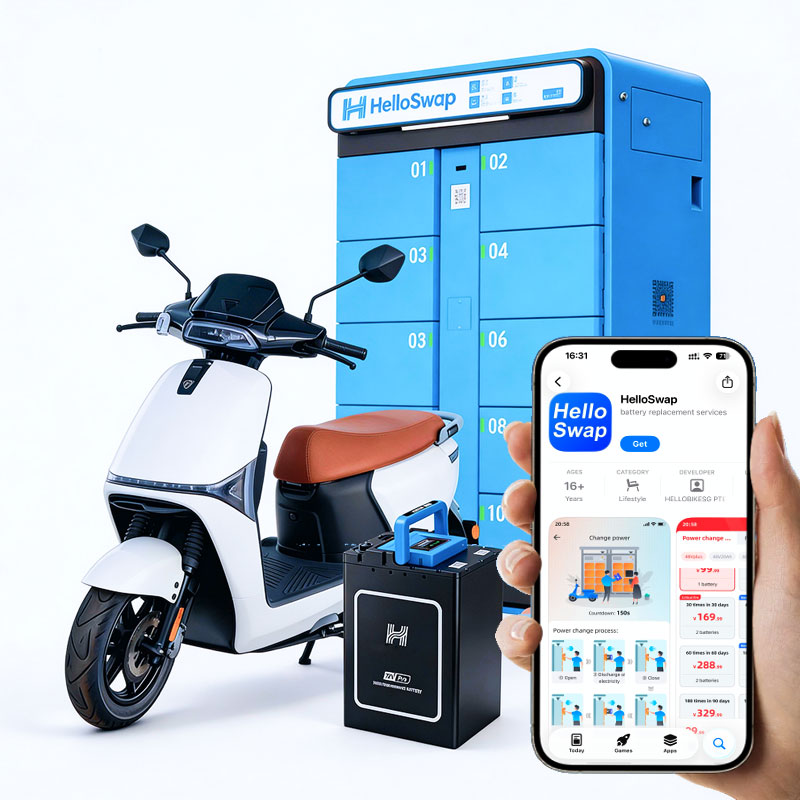
On top of that, the Battery-as-a-Service (BaaS) model has changed the investment logic significantly. Under BaaS, the operator owns the batteries, not the rider. Riders pay a monthly subscription or a per-swap fee, similar to a mobile data plan, and never have to absorb the upfront cost of battery ownership. This removes the biggest barrier to two-wheeler EV adoption, broadens the addressable user base, and turns what would otherwise be a one-time hardware sale into recurring revenue for the station operator.
Investing in a battery swap station for two-wheelers means building a node in an energy network. The value of that node depends heavily on the density and reliability of everything around it.
Asset Component | Typical Share of Initial Outlay | Key Considerations |
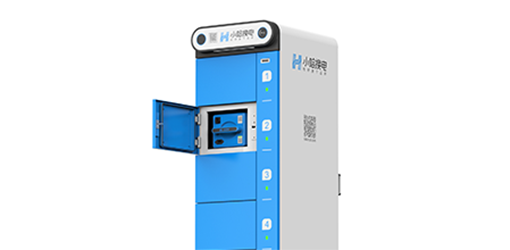
Smart swapping cabinets | 30–40% | Modular design, thermal management, fire suppression |
Battery inventory (BaaS) | 40–60% | Cycle life, energy density, BMS quality |
SaaS/PaaS platform | 5–10% | User authentication, real-time diagnostics, demand forecasting |
Site rights and utility connection | Variable | 220V single-phase supply, proximity to high-traffic nodes |
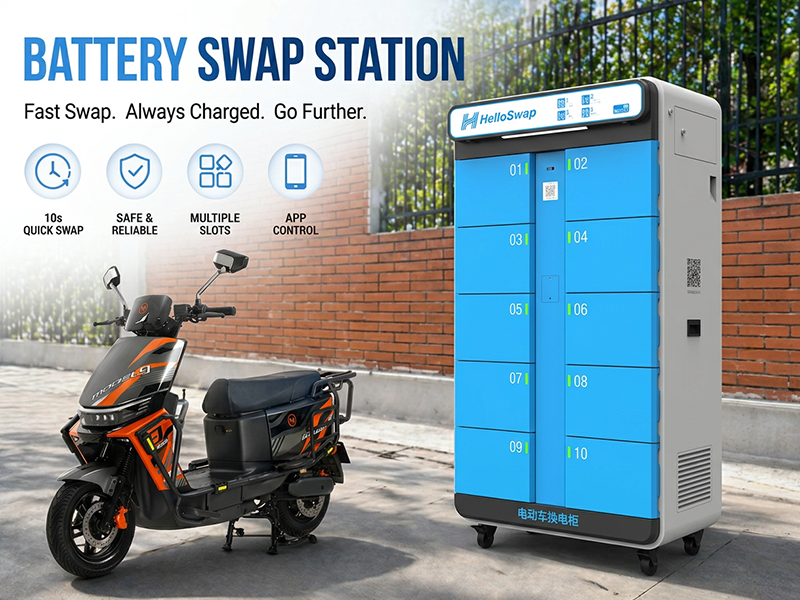
Battery inventory is the heaviest capital commitment and the asset most directly tied to long-term profitability. A standard cabinet occupies roughly 1 square meter of floor space and can serve hundreds of riders daily at high utilization. The SaaS/PaaS layer is not optional: without it, managing a distributed network at any meaningful scale requires far more headcount than the margins can support.
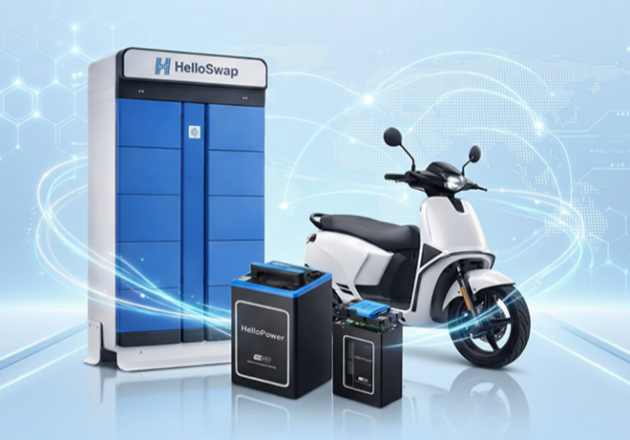
Payback timelines depend on where you are, how many riders are in your area, and what electricity costs locally. HelloPower works with prospective operators to model these variables for their specific market rather than quoting a one-size-fits-all figure. A cabinet near a delivery hub or a busy transit node will turn over batteries far more frequently than one sitting on a quiet suburban street, and that difference compounds quickly over months of operation.
Revenue comes from three main sources:
Subscription plans targeting regular commuters and delivery riders generate the most predictable cash flow and account for the majority of revenue in mature deployments where a user base is established.
Pay-per-swap transactions carry higher per-unit revenue and are important for building early station traffic before a subscriber base grows.
Fleet enterprise contracts like bulk agreements with delivery platforms or ride-hailing operators anchor a station's utilization from the start and often justify expanding battery inventory faster than consumer-only models allow.
Three risk categories come up consistently in serious discussions of battery swap station investment.
Standardization is the most structurally significant. A station built around a single vehicle brand's battery format serves only a fraction of riders in any given location. Operators with the strongest unit economics have either partnered with a battery swap station supplier that supports cross-brand compatibility or entered markets where format alignment has already progressed. HelloPower's batteries support multiple voltage platforms (48V, 60V, and 72V) and dual communication protocols (CAN and RS485), making them compatible with a wide range of commercial two-wheelers and fleet management systems, not just a single vehicle lineup.
Battery lifecycle management deserves more attention than most investors initially give it. An intelligent battery management system that monitors cell health, balances charge cycles, and flags degradation early is not a premium add-on. It is what determines whether a battery asset holds its value through years of commercial service or requires early replacement that compresses the margins you modeled from the start.
Capital intensity at entry is real but manageable. Operators who work with a proven battery swap station supplier inherit validated hardware, software, and operational frameworks rather than engineering everything from scratch. That distinction often determines whether a deployment reaches profitability on schedule or spends its first year resolving preventable technical problems.
Getting from investment decision to operating revenue involves four phases where the right partner makes a measurable difference.
Site selection: High-performing locations share common traits like proximity to petrol stations, convenience stores, logistics transfer hubs, or dense residential areas with active delivery traffic. Data-driven rider density mapping removes most of the guesswork.
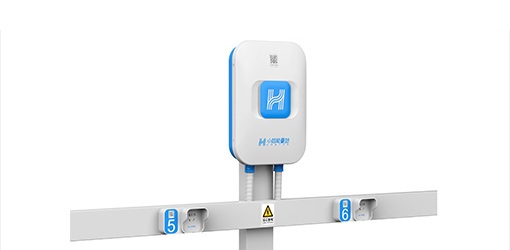
Power infrastructure: Standard cabinets run on a 220V single-phase supply, but high-frequency deployments should assess peak load stability before installation to avoid grid bottlenecks during busy hours.
Fleet and user onboarding: The fastest path to baseline utilization is locking in commercial agreements with local delivery platforms or courier companies before hardware goes live, rather than building a consumer subscriber base from zero.
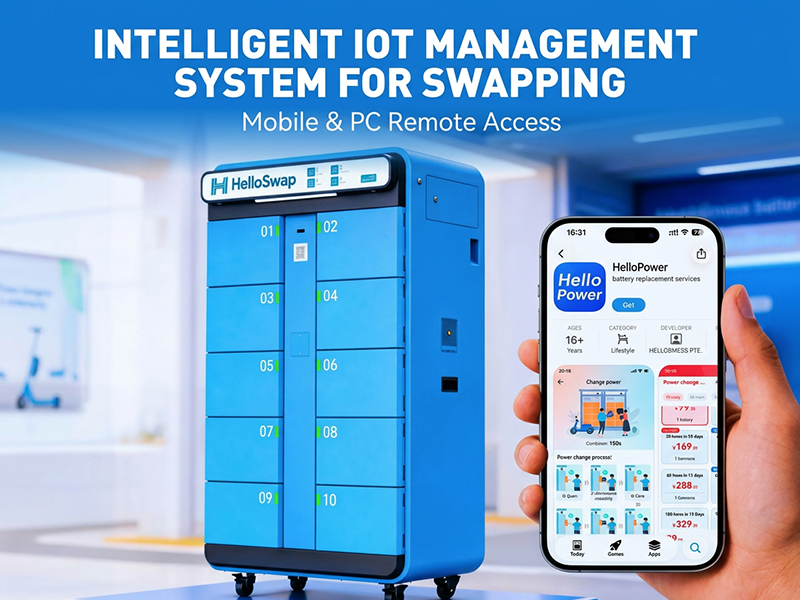
Lifecycle management: Cloud-based monitoring tracks battery state-of-health in real time, allowing operators to plan battery rotation and replacement well before degradation affects service quality.
The markets with the strongest ROI profiles share a few traits. They are urban, with concentrated delivery or commuter populations. Public charging infrastructure is limited or unreliable. Either government EV incentives are active, or fuel costs have risen enough to make electric two-wheelers economically attractive relative to petrol. High-density Asian cities fit this profile most clearly today. Sub-Saharan Africa and the secondary cities of South and Southeast Asia are developing quickly along the same lines.
On the partner side, investors should look beyond the cabinet unit price. A reliable battery swap station supplier needs to demonstrate deployment scale, genuine software platform maturity, and real capacity to support financial modeling and site analysis for new markets.
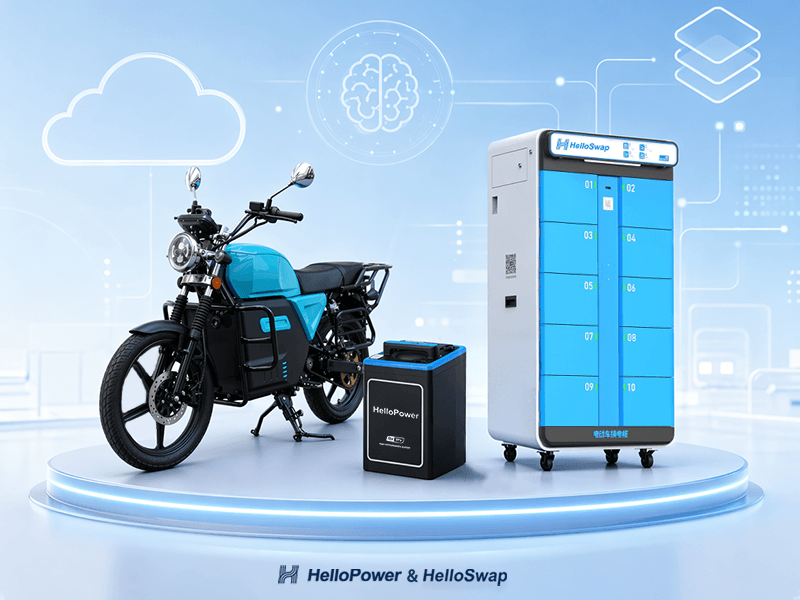
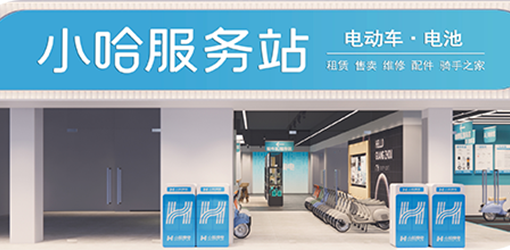
HelloPower, operating as HelloSwap in some markets, is the global arm of Hello Inc., China's leading shared mobility and local services platform. Hello Inc. counts CATL, the global leader in lithium-ion battery development and manufacturing, and Ant Group, China's largest digital payments and fintech platform, among its strategic investors.
The network today spans 500+ cities, with 80,000+ cabinets deployed in the field, 5 million+ batteries under active management, and more than 10 million vehicles on the platform. To date, it has served over 800 million cumulative users.
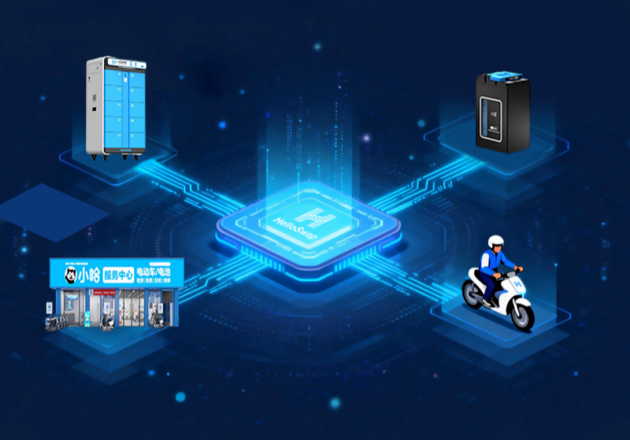
For international distributors and franchise investors, HelloPower provides more than hardware. The full package includes a cloud-based SaaS/PaaS management platform for real-time asset visibility, data-driven site selection support, and the operational frameworks that come from running this industry at scale.
Fill out the contact form at the bottom of this page or visit our contact page to request a distributor or franchise information kit and start the conversation about bringing battery swap infrastructure to your market.
Contact Us
hellopowerglobal@hellobike.com
Location
2F, Building 1, No.898 XiuWen Road, MinHang District, Shanghai, China
Copyright © 2024 福建宁德惠智无限科技有限公司 All Rights Reserved. 闽ICP备2023025900号-3.