Investing in a Battery Swap Station for Two-Wheelers: What You Need to Know Before You Commit Capital
2026-05-14
When eight of the world's largest food and grocery delivery platforms—Delivery Hero, DoorDash, iFood, Mr D, Swiggy, Uber, Wolt, and Zomato—jointly launched the Deliver-E Coalition under UNEP in October 2025, the commitment was significant: 6 billion annual deliveries across 96 countries, with a shared charter to shift those fleets to zero-emission two- and three-wheelers. That charter, however, says nothing about building the infrastructure that makes the switch workable on the ground. Across South Asia, Southeast Asia, and sub-Saharan Africa, where these platforms operate most intensively, that gap has a direct cost: for riders whose income depends on staying on the road, every hour of downtime is earnings lost.

(Source: UNEP - UN Environment Programme)
A delivery rider's relationship with their scooter is nothing like a commuter's. They are on the road six to ten hours a day, sometimes across two shifts, and conventional charging math simply does not hold up. A standard electric scooter battery takes three to eight hours to reach full charge. For riders whose income depends on staying in the zone, a mid-shift charge stop means missed orders, dropped platform ratings, and a gap in earnings that does not recover.
Fleet operators running rider programs face the same wall from a different angle. Centralized depot charging requires significant electrical infrastructure, occupies space, and creates a bottleneck every morning when dozens of vehicles need to be ready at the same time. In markets where electricity access is uneven, like many of the cities where Deliver-E members operate most heavily, that bottleneck becomes a structural barrier to scaling rather than just an operational headache.
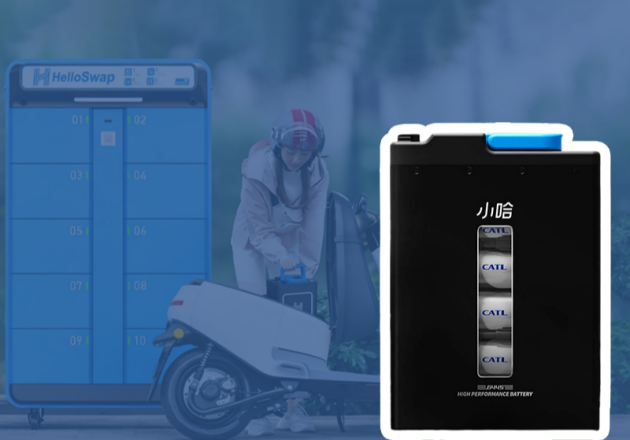
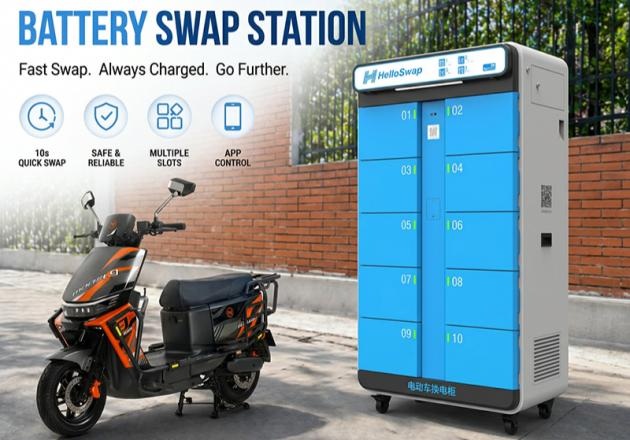
A swap takes under thirty seconds. The rider scans in, slides out the depleted pack, slots in a fully charged one, and is back on the road. For daily operations, battery swapping removes range anxiety as a variable entirely. Riders know a swap point is reachable throughout their shift rather than being locked into a single charge window at the start or end of the day.
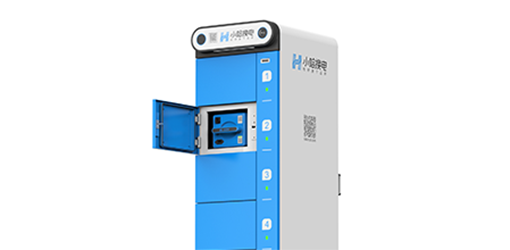
The benefit extends to fleet managers. Batteries charge centrally inside the cabinet during off-peak hours, eliminating the morning scramble and the need for large on-site electrical infrastructure. Each cabinet connects to the cloud, tracking pack health continuously and flagging degraded batteries before they reach a rider. Maintenance becomes predictable rather than reactive.
On cost, the Deliver-E Coalition's own research points to last-mile delivery costs falling by around 25% when riders shift from petrol two-wheelers to electric, alongside emission reductions of nearly 90%. Battery-as-a-Service subscription models extend this further with riders paying per swap or per month rather than buying a battery-inclusive vehicle upfront, making the electric option accessible to independent contractors who cannot commit significant capital to a single asset.
Those benefits, however, depend entirely on one thing: whether the battery swapping network is actually built to match how delivery riders work.
Station placement matters more than station count, and this is where many rollouts underestimate the work involved. A rider working a defined delivery zone needs a swap point within that zone, not several kilometers outside it. Dense coverage along high-order corridors consistently outperforms an evenly distributed network that looks good on paper but forces mid-shift detours that eat directly into earnings.
Battery compatibility is another decision that tends to get made too late. Operators sourcing swap-compatible two-wheelers need to confirm that their cabinet supplier and vehicle supplier share matching battery form factors before the first vehicle is ordered. Resolving form-factor mismatches after a fleet is already on the road is expensive, and in a delivery context, the operational disruption during a transition is felt immediately in rider productivity.
Pricing structure is the third variable that separates pilots that scale from those that stall. Flat consumer-style plans designed for casual commuters consistently underperform when applied to riders working six-day weeks across defined shift patterns. The utilization data looks fine until it becomes clear that the plan does not actually match how riders use the network.
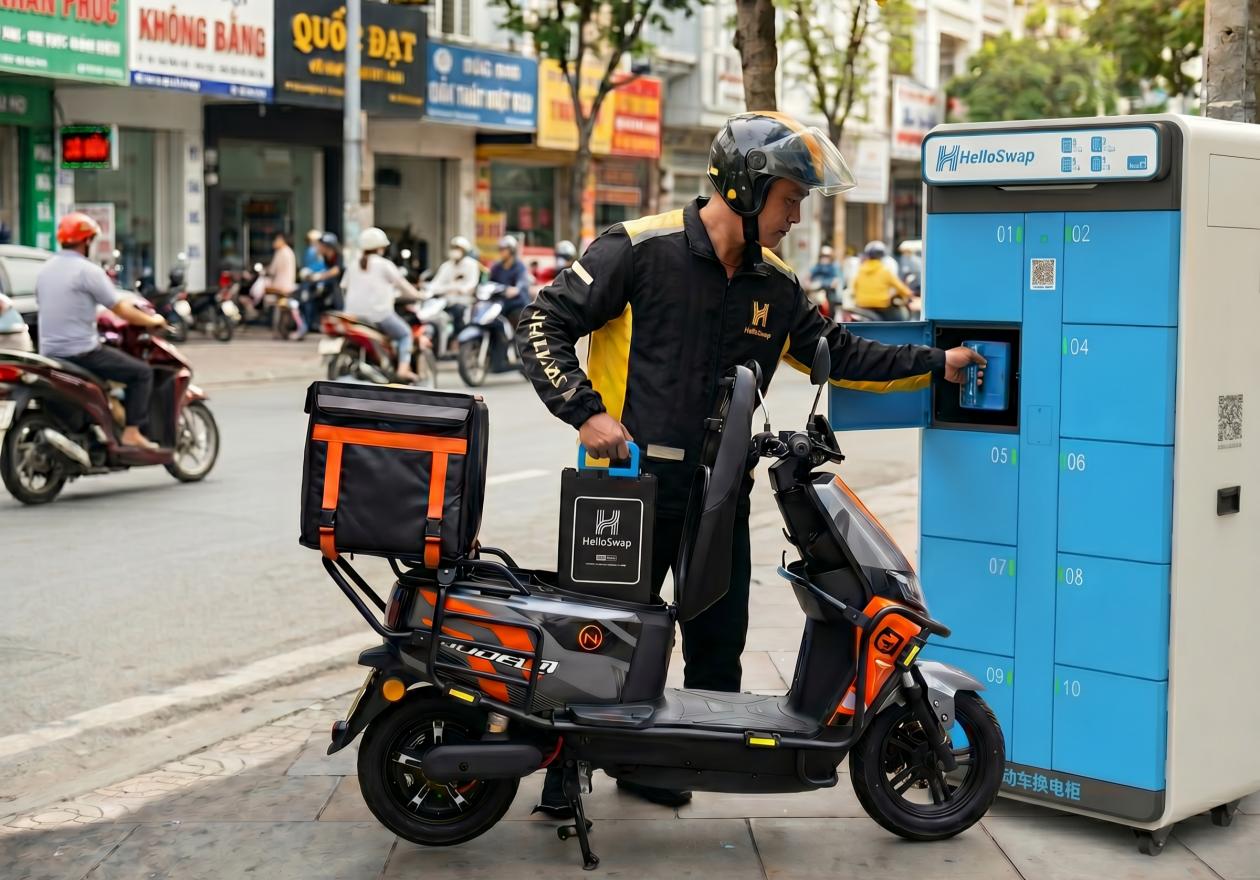
Co-founded by Hello Inc., Ant Group, and CATL, HelloSwap combines Hello Inc.'s city-level mobility operations, Ant Group's digital platform infrastructure, and CATL's battery technology in one platform. Each cabinet runs continuous cloud-connected battery health monitoring, with real-time thermal anomaly detection and automatic fault isolation built into the BMS, so degraded or at-risk packs are pulled from circulation before they reach a rider.
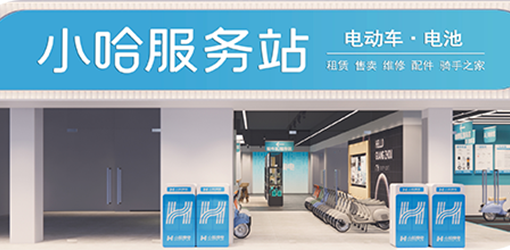
For delivery platforms and logistics operators, HelloSwap supports end-to-end fleet deployments rather than off-the-shelf cabinet sales. This includes planning dedicated swap station locations around delivery hubs, logistics parks, or defined coverage zones; setting up customized enterprise billing structures with fleet management dashboards and usage reporting; and API integration that connects swap data directly with existing order and fleet management systems. HelloSwap has already partnered with major delivery platforms and shared mobility operators in this capacity.
If you are evaluating swap infrastructure for a delivery fleet or scoping a network rollout, contact the HelloSwap team to discuss deployment scope, compatibility, and what a battery swap network for delivery riders looks like in your market.
Contact Us
hellopowerglobal@hellobike.com
Location
2F, Building 1, No.898 XiuWen Road, MinHang District, Shanghai, China
Copyright © 2024 福建宁德惠智无限科技有限公司 All Rights Reserved. 闽ICP备2023025900号-3.