How to Operate a Battery Swapping Business for Two-Wheeled EVs
2026-05-29
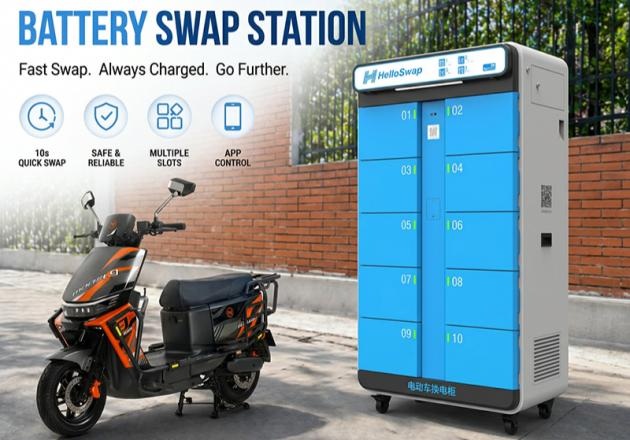
Most operators exploring a battery swapping platform for the first time are focused on the same calculation: how many swaps per day does it take to cover costs? At HelloSwap, backed by Hello Inc., Ant Group, and CATL, we have worked through this question with partners across more than 500 cities. And the operators who scale fastest tend to move past it quickly. They stop treating the swap cabinet as the product and start treating it as the entry point.
That distinction matters more than it might seem.
A battery swapping station generates real, calculable income from day one. Riders pay per swap or on a monthly subscription, and the revenue is predictable once utilization stabilizes. But the economics have a natural ceiling. Cabinet capacity is finite, electricity is a recurring cost, and battery depreciation accumulates over time. Once a station is running at healthy utilization, incremental growth from swap fees alone tends to slow.
This is not a flaw in the battery swapping model. It is simply the nature of infrastructure businesses. The neighborhood gas station figured this out a long time ago. The convenience store attached to the forecourt is not an afterthought. It is often where the actual margin lives. Fuel is what brings people in reliably. Everything else is built on top of that frequency.
A battery swapping platform sits in the same structural position. In markets where delivery riding is a primary income source, riders stop at the cabinet daily, sometimes more than once. Across mature deployments in our network, high-performing stations see individual riders returning hundreds of times over the course of a year. That kind of repeat contact builds familiarity and trust that no retail or repair business can manufacture through advertising alone. The question is whether there is anything adjacent to it worth spending on.
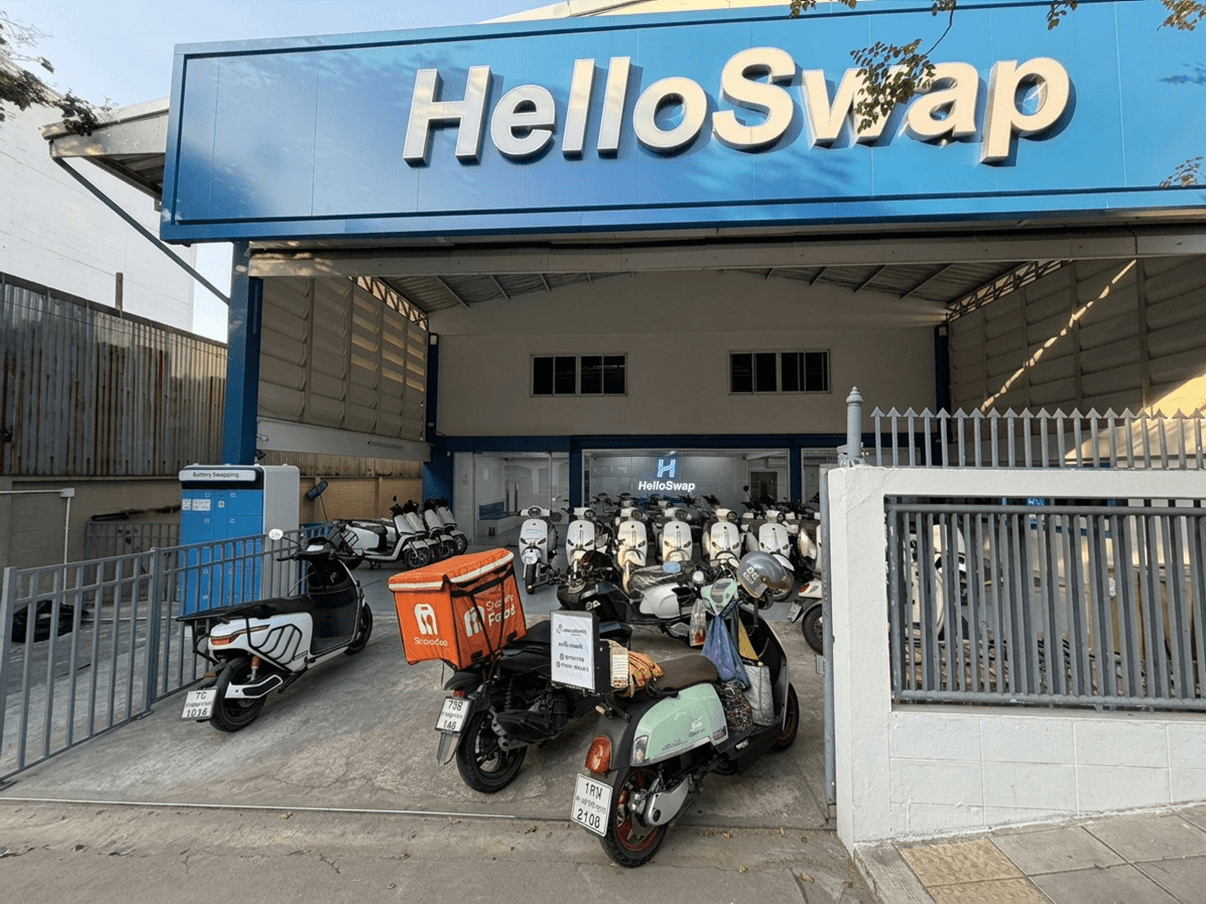
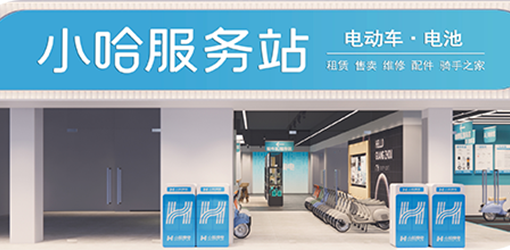
[Explore HelloSwap Service Station Solution >>]
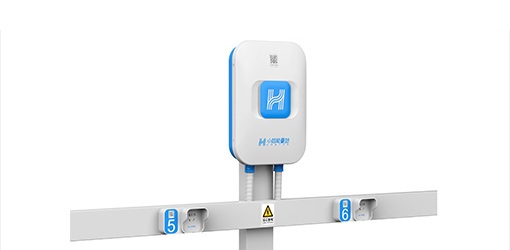
The first natural extension involves the other ways riders interact with batteries and energy. Not every rider who comes through the door is looking for a swap subscription. Some want to charge a battery they already own. Some need a short-term rental before committing to a longer plan. Others want to purchase a replacement battery outright when their current one degrades.
Offering this full range (swap, charge, rent, and retail) under one roof captures a wider share of the rider population already visiting the site. A rider who comes in for a swap and notices a battery retail option is already a warmer prospect for that conversion than anyone a separate shop could reach through a marketing budget.
Riders who depend on their two-wheeler for income take maintenance seriously, but convenience is always a factor in where they go. A location that already handles their energy needs is a natural place to handle vehicle needs as well, provided the service quality is there.
For operators who want to go further, extending into vehicle rental and retail is a way to reach riders who are not yet ready to commit to full ownership. Rental serves those filling in during peak delivery periods or testing a vehicle type before buying. Retail, combined with the battery-as-a-service model that a swap platform naturally enables, lowers the upfront purchase cost significantly. When the battery is handled through a subscription rather than bundled into the price, a new two-wheeler becomes accessible to a much wider pool of riders.
Maintenance closes the loop. A rider who buys a vehicle from your station and subscribes to your swap service is not a one-time customer. Bringing their bike in for periodic servicing turns a series of separate transactions into an ongoing relationship with multiple revenue touchpoints that compound over time.
Rider by rider, the station builds its user base. But some of the most durable revenue growth in battery swapping comes from operators who move into serving delivery companies and logistics operators at the fleet level.
A delivery company running electric two-wheelers has a clear operational problem: energy reliability. If riders cannot swap quickly, routes slow down. If batteries fail unpredictably, costs spike. A swap network that can demonstrate consistent uptime and real-time visibility into cabinet availability is solving a genuine operational problem, not just selling a service.
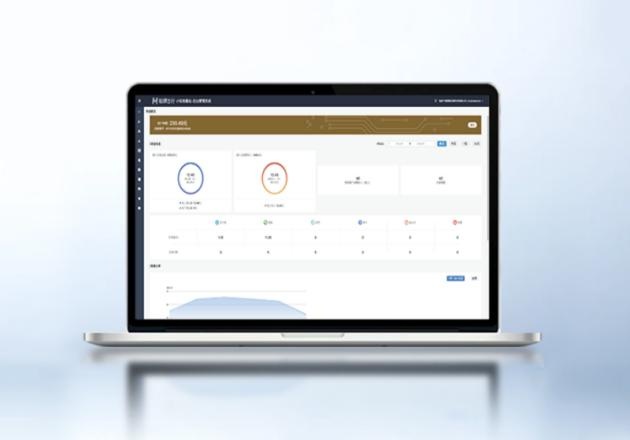
This is where the software layer of a battery swapping platform becomes as important as the hardware. Consolidated visibility across all stations, covering swap volume, battery inventory, cabinet uptime, and rider activity, gives operators the data foundation to have that conversation with a fleet manager on concrete terms rather than promises. That data-driven operational picture is increasingly what serious fleet operators ask for before they commit.
Fleet agreements change the economics of the whole operation. Instead of building utilization incrementally, a single agreement anchors volume across multiple stations from launch. It also creates a reference point that other fleet operators can evaluate. The first agreement of this kind is always the hardest to negotiate. After that, the conversation with the next operator tends to be considerably shorter.
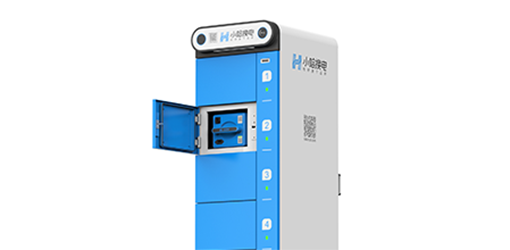
None of these layers work sustainably without reliable operational infrastructure underneath them. The swap hardware needs to perform consistently across real-world conditions, varying temperatures, inconsistent grid supply, and high transaction frequency. The BMS needs to manage battery health proactively so degraded packs are identified before they cause failed swaps during peak hours. The platform software needs to surface operational issues before they reach riders.
These requirements come directly from operating in conditions where a cabinet that goes offline at 7 a.m. in a busy delivery corridor affects dozens of riders within the hour. The operational standards we build into HelloSwap's platform reflect what we have learned through actual deployments in diverse markets, including our running network in Bangkok. The charging optimization logic, alert thresholds, and battery health models in our SaaS tools were shaped by that field experience. Operators using the platform get data-driven decision support from day one, built on patterns that took years of real deployments to surface.
When operators deploy with us, they are not working through those lessons from scratch.
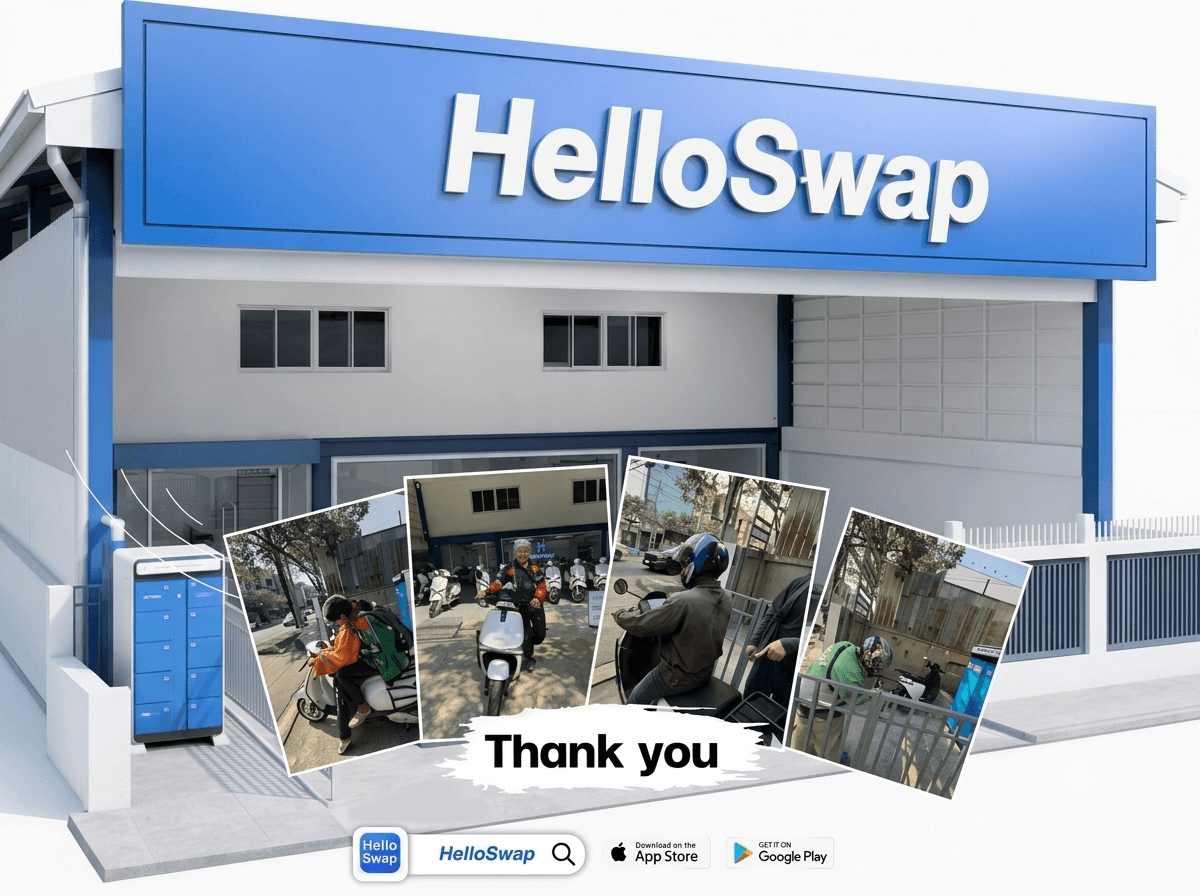
The ecosystem described above is not a theoretical model. It is what we have watched develop across markets where delivery riding drives daily economic activity, and where operators who started with a single cabinet have grown into multi-site networks serving thousands of riders.
If you are evaluating how a battery swapping platform could work in your market, we are ready to walk through what the model looks like on the ground. Contact the HelloSwap team for a customized market assessment and let us start with your specific context.
Contact Us
hellopowerglobal@hellobike.com
Location
2F, Building 1, No.898 XiuWen Road, MinHang District, Shanghai, China
Copyright © 2024 福建宁德惠智无限科技有限公司 All Rights Reserved. 闽ICP备2023025900号-3.