
Can a Petrol Station or Motorcycle Workshop Run a Two-Wheeler Battery Swapping Business?
2026-10-20
Comparing petrol and battery-swapping electric motorcycles means looking beyond the purchase price. Fuel, battery subscriptions, swap charges, maintenance and replenishment time all affect the fleet's budget. Total cost of ownership, or TCO, combines these expenses over the planned holding period and expresses them as a monthly cost per motorcycle.
Both motorcycles must carry the required payload, maintain the necessary speed and complete the scheduled routes and shifts. Business mileage is the distance required for delivery work. Trips to petrol stations or swap cabinets consume energy and time but do not increase delivery output, so record those detours separately.
Input | What to Record |
Operating market | City, currency, quotation date and tax treatment |
Business mileage | Daily delivery kilometres and working days per month |
Duty requirements | Payload, gradients, road conditions and shifts |
Holding period | Planned months before sale or replacement |
Ownership arrangement | Purchase, finance or rental |
Payment responsibility | Costs paid by the fleet versus the rider |
Base consumption on loaded delivery routes and prices on current local quotes. Apply the same tax treatment to both options and deduct only confirmed incentives.
Unchanged overheads and standard rider pay sit outside motorcycle TCO; additional expenses caused by the motorcycle choice belong in it. Transferring a fuel or subscription bill to riders changes who pays, not the underlying operating cost.
Buying new motorcycles and replacing an existing fleet are different decisions. For a new purchase, both acquisition prices enter the comparison. For a petrol motorcycle already in service, its original purchase price is spent.
Start with what it could sell for today. Keeping it means giving up those proceeds while continuing to pay operating costs. Compare its current value and expected future resale value with the electric replacement's acquisition and transition costs. Any finance settlement also belongs in the replacement cash budget.
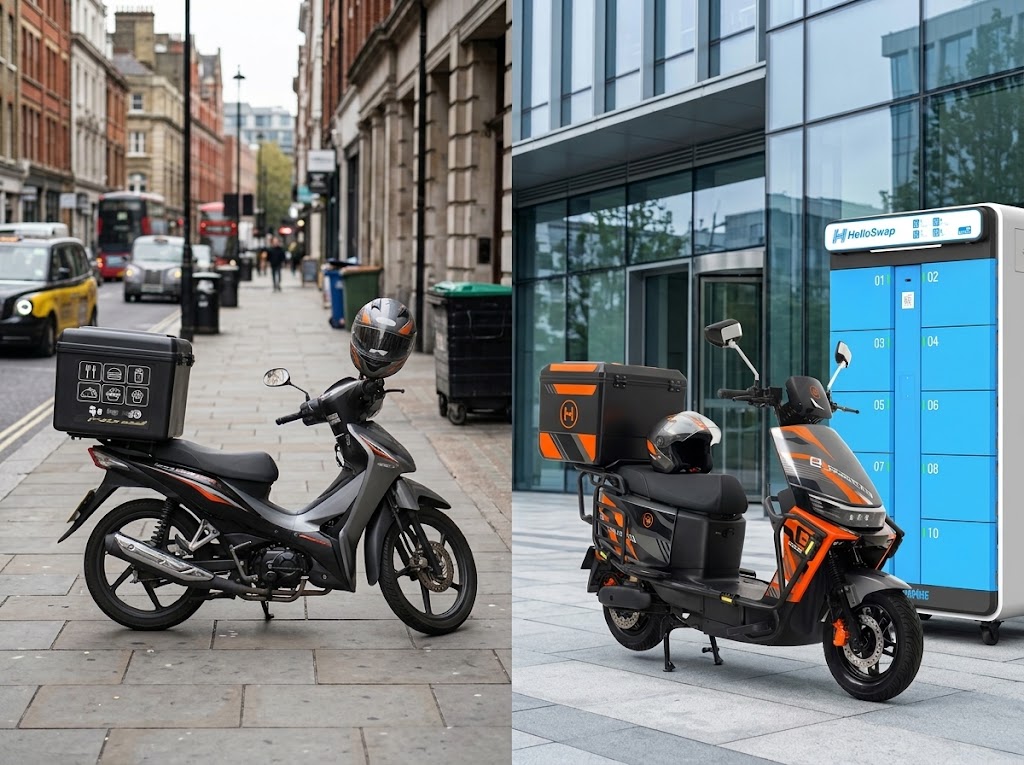
Monthly TCO spreads acquisition, operating and finance costs across the holding period, after deducting resale proceeds. Actual payments will vary by month.
Average Monthly TCO = (Net Capital Cost + Holding-Period Operating Costs + Finance Costs) ÷ Holding Months
Net capital cost is acquisition cost minus expected net resale proceeds. Acquisition includes freight, approved adaptation, initial registration and non-recoverable taxes needed to put the motorcycle into service. For an existing motorcycle retained in service, use its current market value instead of its original purchase price.
Include separately owned batteries and replenishment equipment, allocating shared costs across the expected active fleet. Keep their acquisition costs, operating expenses, and residual values identifiable so they can be updated without rebuilding the entire motorcycle comparison.
Fill in the figures based on your local currency and vendor quotes using the Entry Rules below.
Monthly Cost Item | Petrol | Electric With Swapping | Entry Rule |
Motorcycle depreciation or rental | — | — | Use one ownership method |
Finance interest and fees | — | — | Exclude principal where depreciation is used |
Petrol | — | — | Include replenishment detours |
Separately billed electricity | — | — | Exclude energy bundled into service charges |
Battery subscription, swap access and usage | — | — | Include commitments and overage |
Maintenance and repairs | — | — | Use model-specific schedules and local prices |
Fleet-paid battery costs | — | — | Include ownership, replacement or liability costs not covered elsewhere |
Insurance and recurring registration | — | — | Confirm commercial-delivery coverage |
Spare motorcycles, towing and recovery | — | — | Allocate attributable costs without duplication |
Additional rider time | — | — | Include extra paid hours or overtime |
Additional software and administration | — | — | Include incremental costs only |
Fleet-owned replenishment infrastructure | — | — | Allocate capital and operating costs |
Other contractual charges | — | — | Allocate one-off fees over the holding period |
Average Monthly Direct TCO | — | — | Total applicable rows |
Record the source and basis of each entry. Mark estimates and unresolved charges rather than entering unknown costs as zero.
Check whether the electric motorcycle quotation includes an owned battery or assumes access through a separate service. If the battery is included in acquisition cost, do not add its purchase cost again. Provider-owned batteries and cabinets belong in the service agreement, not the fleet's asset budget.
Interest and finance fees sit alongside depreciation, but loan principal belongs in the cash budget. For rentals, rent replaces depreciation, with separately payable expenses and end-of-term charges added where applicable.
Match petrol purchases to distance travelled, including replenishment detours. Use representative loaded-route records for existing motorcycles and clearly labelled consumption estimates for untested replacements.
For swapping, apply the quoted tariff to expected usage. Where electricity is separately billed, use metered charging energy and applicable charges. Nominal battery capacity alone does not capture charging losses or site electricity consumption. Allocate shared electricity costs once, without repeating them under infrastructure expenses.
Once both totals are complete, compare the monthly difference and divide each by the same business mileage to obtain cost per business kilometre. Keep lost delivery margin separate so the direct cost comparison remains visible.
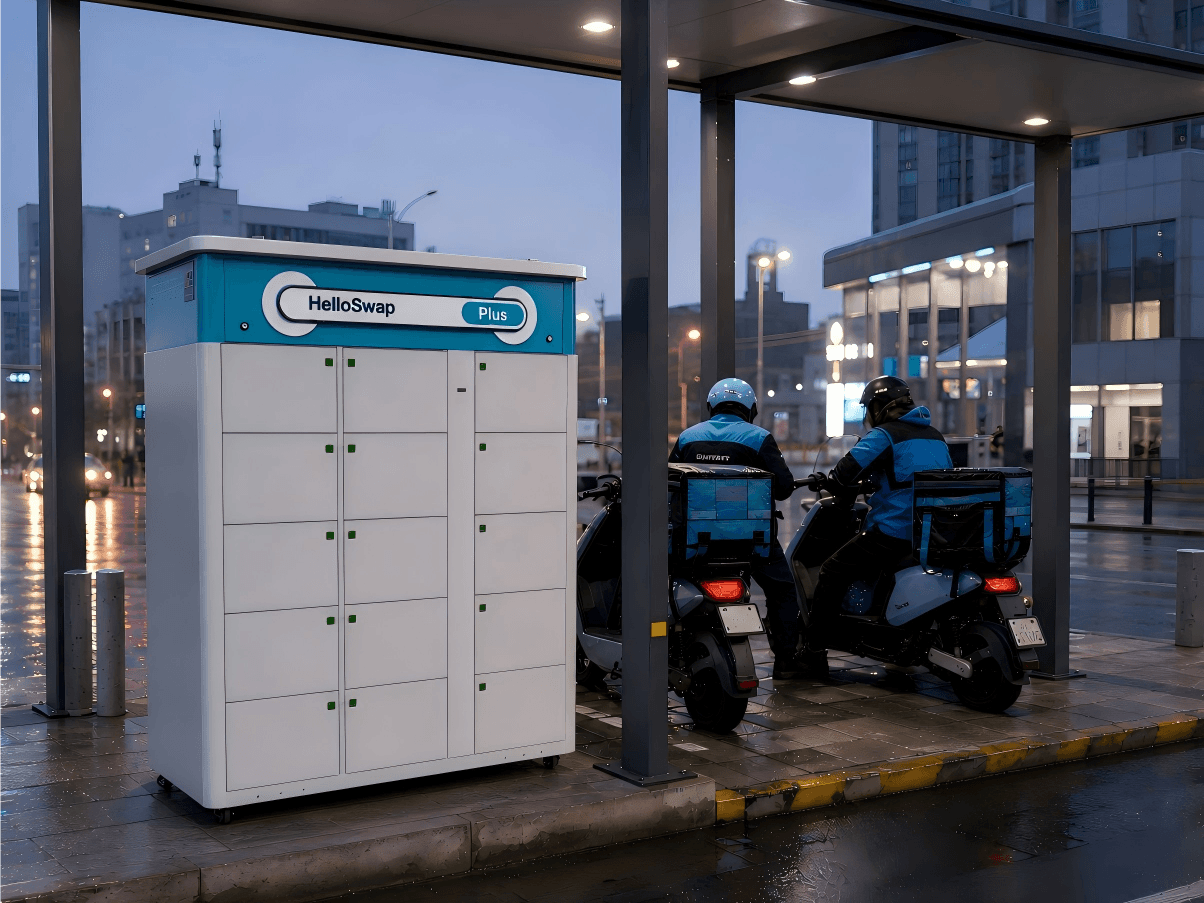
A subscription may cover battery rental, network access, energy or only some of those items. The quote must show the complete bill at expected usage, including any separate charge per exchange.
Allowances, overage and minimum commitments affect costs when mileage changes or motorcycles become inactive. Check the billing unit, eligible batteries, covered stations and restrictions on commercial use. Apply any specified price-adjustment mechanism over the holding period; flag future rates that remain open.
Electricity included in the package should not be added again. Non-refundable onboarding and termination fees enter the holding-period cost. Refundable deposits primarily affect funding needs, although financing costs or expected deductions may also apply.
Exchange frequency depends on usable energy under the delivery load. Less available energy can mean more stops and, under usage-based pricing, a higher bill.
Confirm compatibility between the selected motorcycle, battery and swapping system before procurement. The agreement should define acceptable battery condition and normal replacement obligations, alongside responsibility for defects, accidental damage, loss and theft.
Replacement covered by the subscription does not need another allowance. Where liability remains with the fleet, estimate exposure from contract limits and relevant incident records rather than inserting an arbitrary monthly amount.
Electric motorcycles avoid petrol-engine servicing but still require tyres, brakes, suspension and model-specific maintenance. Calculate servicing from the selected motorcycle's distance-based schedule and local workshop prices.
Check commercial-use warranty eligibility, mileage limits, labour coverage and parts availability. A covered repair may still leave the motorcycle unavailable while the fleet waits for service.
Include inspection and replacement of battery locks, connectors or other swapping-related components where the fleet is responsible for them. Separate routine servicing from unscheduled repairs so each allowance has a clear basis.
Measure replenishment from leaving the route to resuming work, including queues and unsuccessful visits. Swapping avoids charging waits, but its comparison with petrol refuelling depends on station access and availability during working hours.
Towing, spare motorcycles and replacement transport are direct expenses. Allocate spare capacity according to actual fleet requirements; a dedicated spare should not be charged in full to every active motorcycle.
Lost contribution margin applies only to orders left unfulfilled. If a spare motorcycle completes them, count its attributable cost without also treating those orders as lost business. Use contribution margin—the revenue left after variable delivery costs—not the full order value.
A route-matched trial can establish whether both options deliver comparable output. Record payloads, exchange frequency, detour distance, replenishment time, faults and completed orders across normal and peak shifts.
These results show whether the quoted service supports the workload or requires additional spare motorcycles. Use the intended rollout size when allocating equipment and minimum commitments: a small trial can have a different per-motorcycle cost.
Different mileage requires recalculating fuel, service usage, maintenance intervals and residual value. A fixed subscription may be underused at low mileage, while heavier operation can trigger overage and additional servicing.
Support resale estimates with motorcycles of comparable mileage and condition, or a written buyback offer with its conditions. Where the battery remains provider-owned, value the motorcycle alone and check whether a future buyer can obtain compatible battery service. A short trial cannot establish long-term resale performance.
Monthly TCO does not show when payments fall due. Prepare a separate cash budget for deposits, down payments, instalments, setup expenses and proceeds from selling existing petrol motorcycles.
For an outright purchase, assess whether additional acquisition and transition spending can be recovered through operating cash savings. Exclude depreciation from those savings and account for irregular repair payments.
For financed or rented motorcycles, review the dated payment schedule, including principal repayments and end-of-term obligations. A lower average ownership cost can still require more cash during the transition.
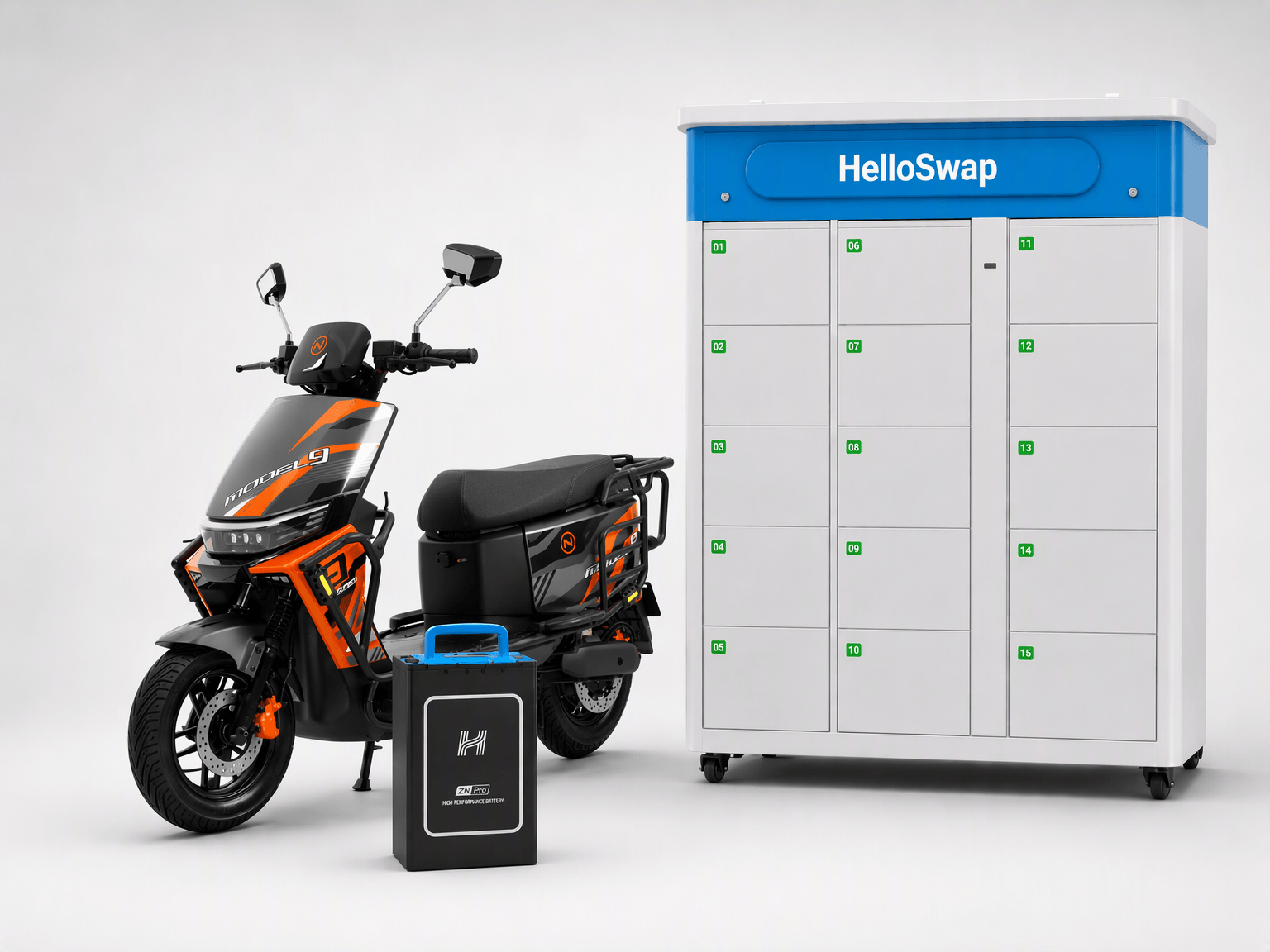
Calculating TCO for your specific operational parameters requires accurate hardware and service inputs. HelloSwap provides custom TCO modeling and turnkey battery swapping infrastructure for fleet managers. We combine swappable batteries, smart cabinets, compatible electric motorcycle options and operating software, with adaptation assessment and deployment support for local projects.
Send us your operating city, fleet size, motorcycle models, daily mileage, shifts and current costs. Tell us whether you plan to use an existing swapping network or deploy dedicated equipment so we can assess motorcycle compatibility and prepare the relevant system proposal.
Contact Us
Location
2F, Building 1, No.898 XiuWen Road, MinHang District, Shanghai, China
Copyright © 2024 福建宁德惠智无限科技有限公司 All Rights Reserved. 闽ICP备2023025900号-3.


