
How Much Delivery Time Do Riders Lose to Charging?
2026-10-28
Delivery fleets buying electric motorcycles or seated electric scooters face three sourcing options: pre-matched models, new motorcycles adapted for battery swapping, or adaptation of an existing electric fleet. The choice affects compatibility work, quotations, warranty responsibilities and delivery timing. At HelloSwap, we bring motorcycle sourcing, adaptation, batteries, battery swap cabinets and operating software into the same project assessment. This procurement checklist follows those decisions from the operating brief to the fleet order.
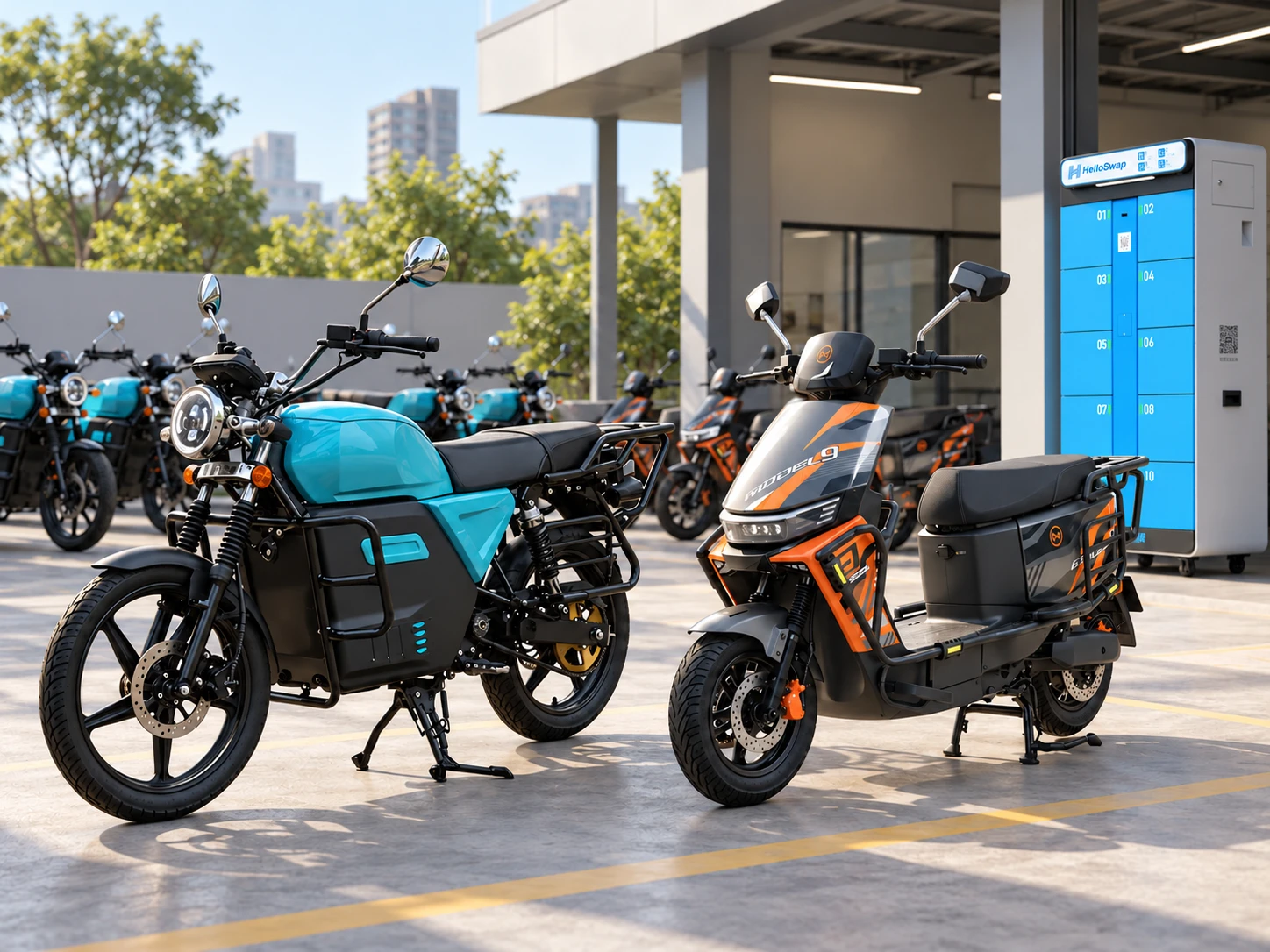
Payload, routes, shifts and access to energy determine which motorcycle configurations deserve consideration. A shared operating brief gives suppliers a consistent basis for their proposals and helps the operator identify where those proposals differ.
Requirement | Information from the operator | Response required from the supplier |
Operating market | Country, city and commercial delivery application | Proposed model category and applicable documents |
Order and timing | Initial quantity, expansion forecast and target launch | Availability, order assumptions and delivery milestones |
Workload | Normal and high-demand daily distance, shifts and peak periods | Proposed configuration and replenishment assumptions |
Payload | Rider, cargo, delivery box, racks and accessories | Permitted loads, rack limits and loaded-performance evidence |
Routes | Speeds, gradients, surfaces and stopping patterns | Relevant performance results and operating limits |
Environment | Temperature, rain, dust and parking exposure | Protection specifications and environmental limits |
Energy access | Existing battery swap network, depot charging or dedicated equipment | Compatible replenishment arrangement |
Rider use | Riding position, battery access and handling constraints | Suitability for the intended riders and delivery setup |
Maintenance | Local workshop capability and acceptable repair turnaround | Service requirements, parts availability and support arrangements |
Use route records, load measurements and maintenance history where available. Separate profiles are useful when the fleet serves materially different workloads, such as light restaurant orders and heavier parcel routes.
Range figures need a stated payload, speed, terrain, temperature and battery condition. These conditions allow the operator to compare supplier claims against the work recorded in the brief. The assessment should also account for expected battery ageing over the planned service period.
The replenishment plan determines how much work each battery must support between stops. For battery swapping, assess cabinet access along working routes, opening hours and peak-period availability. Include detours, waiting and unsuccessful visits when estimating time away from deliveries and calculating delivery fleet operating costs.
The sourcing route determines how much integration work remains and which parties must coordinate it. Existing motorcycle resources, local servicing and the condition of the current fleet all influence the choice.
Route | When it is worth considering | What must be established before commitment |
Buy pre-matched electric motorcycles | The fleet can adopt a model already matched to the intended battery swapping system | Exact motorcycle version, battery platform, matching-system evidence and target-market suitability |
Source new motorcycles for adaptation | A preferred model or local supply relationship offers practical advantages | Adaptation feasibility, engineering scope, sample arrangements, cost and warranty responsibilities |
Adapt an existing electric fleet | Serviceable motorcycles have sufficient remaining life to justify the work | Condition, model consistency, required repairs, adaptation cost and downtime |
For motorcycles requiring adaptation, agree who will provide the sample and technical information, who will carry out the work, and how costs will be handled if the assessment identifies an unsuitable model.
Existing electric fleets need a condition survey grouped by production version, relevant electronics and battery-compartment layout. Compare each group’s remaining service life with the combined cost of inspection, repairs, adaptation and downtime, including any temporary replacement capacity.
After the sourcing route is selected, the supplier needs to show which requirements the proposed configuration already meets and which remain open. A useful response identifies the evidence, responsible party and effect on price or delivery.
Item | Evidence to request | Decision it supports |
Model identity | Exact motorcycle version and relevant hardware/software record | Whether the assessed configuration represents the order |
Battery installation | Fit, retention, access and rider-handling assessment | Whether the installation is suitable for repeated use |
Electrical operation | Operating voltage range, current demand and protection assessment | Whether the proposed battery meets the motorcycle’s electrical requirements |
System communication | Demonstrated recognition, charging, locking and required data exchange | Whether the proposed combination works with the battery swapping system |
Delivery performance | Results under representative loads, routes and shifts | Whether the motorcycle can complete the assigned work |
Market requirements | Applicable documents and assigned responsibility for local checks | Which import, registration or approval actions remain for the proposed model and commercial use |
Changes after assessment | Notification and reassessment procedure | How substitutions will be controlled |
Suppliers can mark each response as confirmed, pending validation, deviation or excluded. Pending two-wheeler adaptation work should have an agreed owner, completion point and effect on the quotation or delivery schedule.
Reports are most useful when they identify the tested configuration and conditions. Any differences from the proposed supply should be listed for review, including changes to batteries, electronics or installation parts.
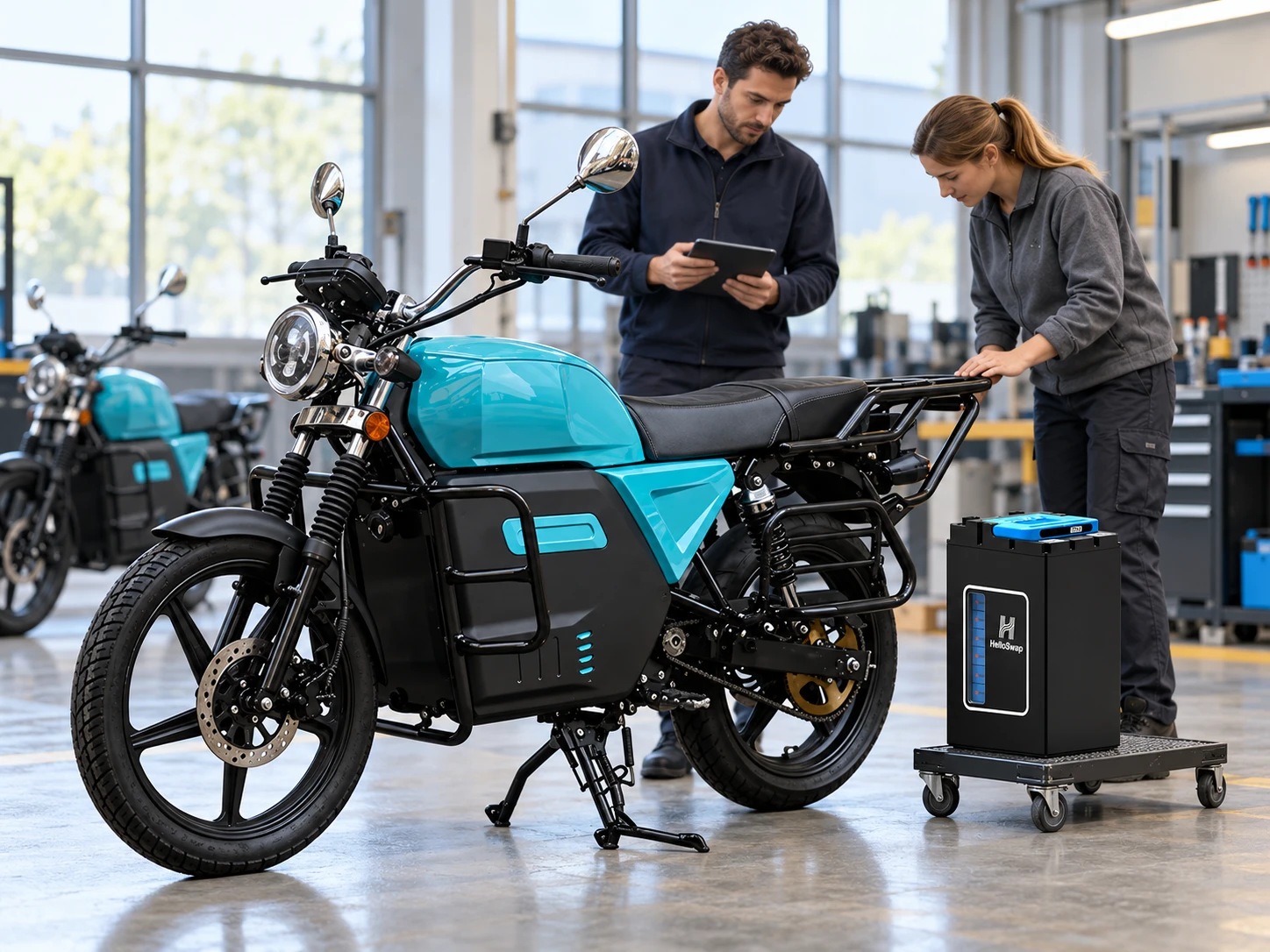
A request for quotation—an RFQ—connects the operating brief and technical assessment to a defined purchase. Itemized scope makes it easier to compare suppliers and identify costs that will arise after delivery.
Quotation category | Items to clarify |
Motorcycle supply | Model, quantity, assembly state, delivery accessories and included battery, if any |
Adaptation | Assessment, samples, engineering, installation, connected hardware and inspection |
Battery arrangement | Ownership, access charges, replacement obligations and fleet liability |
Dedicated equipment | Cabinets, circulating batteries and installation scope, where required |
Software | Included functions, user access, setup, recurring fees and custom integrations |
Connectivity | Network requirements, SIM/data arrangements and recurring charges |
Logistics and local work | Freight, insurance, import responsibilities, assembly and commissioning |
Commercial terms | Minimum order quantity, quotation validity, payment milestones and lead times |
A fleet joining an existing battery swapping network may purchase motorcycles and service access together. A dedicated deployment also needs a defined scope for cabinets, sites and circulating batteries, with the proposed quantities supported by usage and charging-recovery assumptions.
With the supply scope aligned, compare the total purchase cost and recurring charges over the same operating period, using consistent mileage and usage assumptions.
Service arrangements affect how quickly motorcycles return to work. Before supplier selection, obtain written answers covering:
Warranty eligibility for commercial delivery, including usage limits.
The effect of adaptation on the original motorcycle warranty.
Recommended spares for the first shipment.
Prices and lead times for wear parts and swap-related components.
Local repair capability and technician training requirements.
Operating instructions, service documentation and configuration records included at handover.
The first point of contact for faults involving several system components.
Response, repair, labour and transport responsibilities.
Notice of model discontinuation or key component changes.
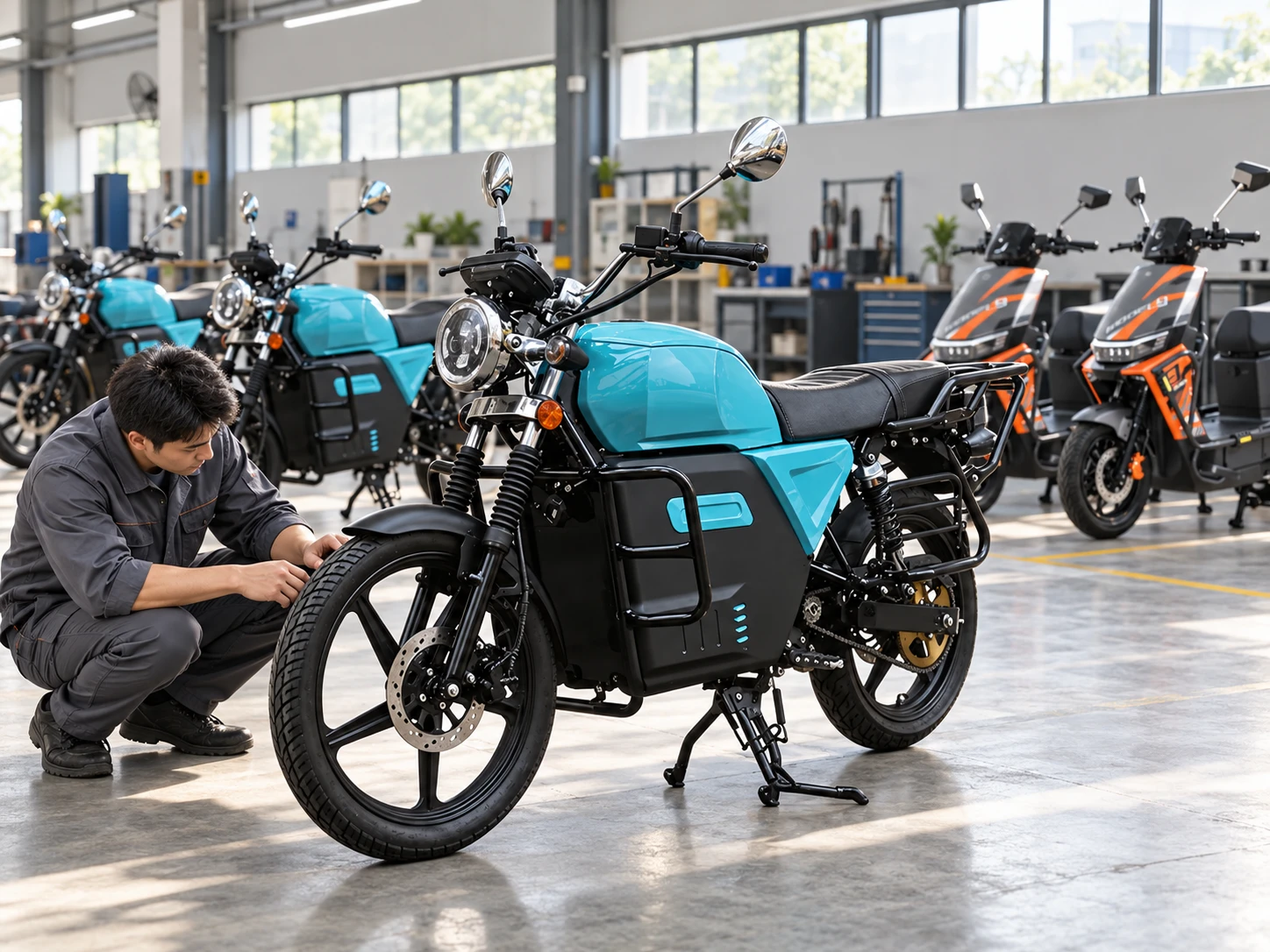
Sample procurement provides a defined opportunity to close the outstanding questions before a larger commitment. Acceptance conditions should be agreed early enough to influence the sample build and evaluation.
The sample agreement should specify:
The configuration and delivery accessories being evaluated.
The outstanding requirements it must demonstrate.
Who conducts the evaluation and records the results.
Who accepts the outcome.
How corrective work and any repeat assessment are handled.
Sample quantity and evaluation duration should reflect model variation, operating conditions and unresolved questions. Record any temporary parts and identify which checks must be repeated on the intended production configuration.
Long-term durability claims need supporting evidence beyond the sample evaluation, particularly where the trial covers only a short period of operation.
The fleet order should reference the accepted specification, assessment results and any agreed deviations. Define who inspects the shipment, how non-conforming supply will be corrected, and who approves proposed substitutions.
Agree delivery dates against the planned start of operations, including access to battery swapping and local service support. Where an earlier deposit or production reservation is necessary, record the outstanding conditions and the consequences if they cannot be satisfied.
HelloSwap supports electric two-wheeler sourcing and adaptation assessment alongside batteries, smart battery swap cabinets, rider applications and operating software. We can assess a preferred model or discuss compatible motorcycle options based on your delivery requirements.
Share your operating country and city, expected quantity, target launch date and any preferred models. Let us know whether you will use an existing battery swapping network or need dedicated equipment. If model selection is still open, send us your route, load and shift requirements.
Contact Us
Location
2F, Building 1, No.898 XiuWen Road, MinHang District, Shanghai, China
Copyright © 2024 福建宁德惠智无限科技有限公司 All Rights Reserved. 闽ICP备2023025900号-3.


