
How Much Delivery Time Do Riders Lose to Charging?
2026-10-28
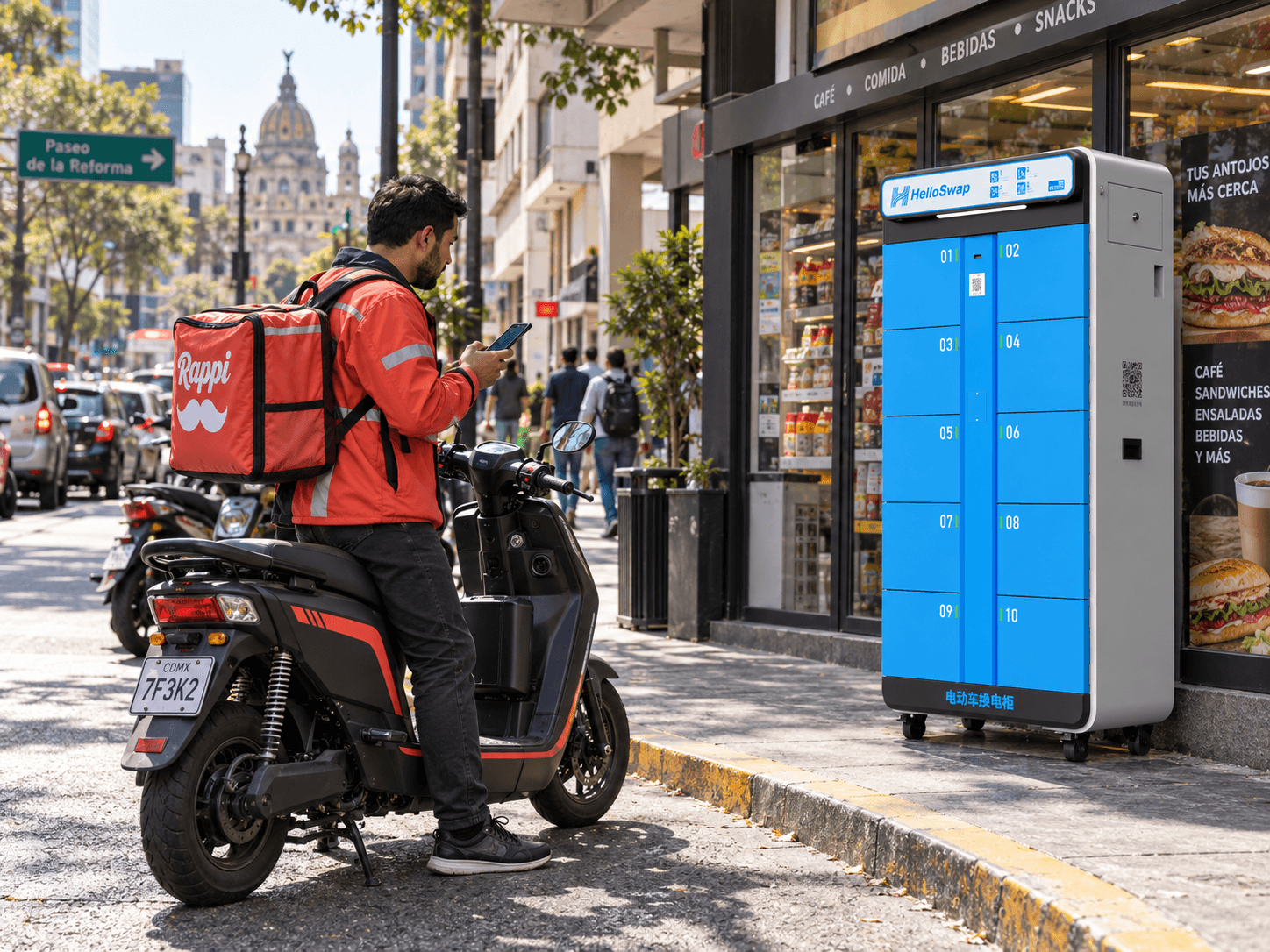
Electric motorcycles are entering Latin America's delivery market through platform investment, rider programs and quick-commerce operations. iFood is investing in Brazil's electric two-wheeler supply chain, while Rappi-linked projects in Mexico and Peru have combined electric motorcycles with battery services.
Brazil, Mexico, Colombia, Peru and Chile have different motorcycle supply, rental and financing channels. For local fleets and distributors, the route into electrification depends on how riders obtain their motorcycles and where they need energy during work.
Market | Food delivery platforms | Motorcycle channel or project | Potential electrification entry point |
Brazil | iFood, 99Food, Keeta, Rappi. | iFood–Mottu rental benefits; iFood investment in electric two-wheeler supply. | Electric motorcycle additions to rental fleets |
Mexico | Uber Eats, DiDi Food, Rappi. | Rappi–ITALIKA electric motorcycle initiative announced in 2023; Ozon rider financing in Mexico City. | Motorcycle purchase or rental plans linked to battery service |
Colombia | Rappi, DiDi Food. | Auteco, Rappi and Crediorbe rider financing; a separate Auteco–Renting Bancolombia enterprise relationship. | Individual rider purchases or business rental projects |
Peru | Rappi, PedidosYa, DiDi Food. | Rappi Turbo's Chorrillos electric motorcycle pilot; Galgo financing events for Rappi riders. | Delivery-hub electrification and rider motorcycle replacement |
Chile | PedidosYa, Uber Eats, Rappi. | PedidosYa electric-mobility pilots. | Motorcycle project development within a defined rider group |
Platform coverage varies by city. A fleet project needs motorcycle supply, maintenance and energy access within the riders' actual working area.
In March 2025, iFood announced an initial US$7.5 million investment in a YvY Capital fund supporting Brazil's electric two-wheeler industry. The investment covers motorcycle manufacturing, batteries, components, charging infrastructure and energy businesses.
iFood also helps riders access motorcycles through its Mottu partnership. Its June 2026 rider announcement includes rental and purchase benefits. For rental businesses, an electric motorcycle can enter the fleet during a scheduled expansion or replacement purchase, with maintenance and energy service built into the new offer.
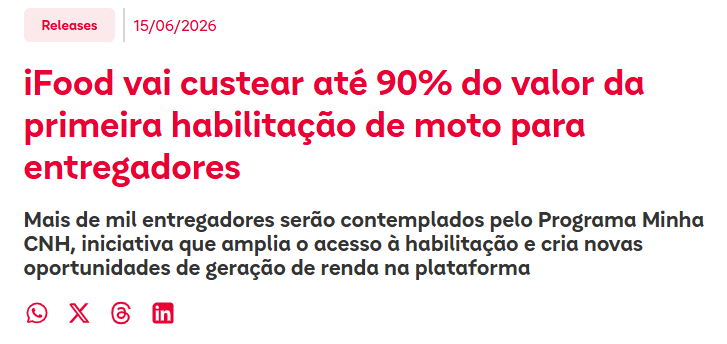
iFood: iFood program covering up to 90% of a delivery rider's first motorcycle license cost
The first deployment can be planned around existing rental customers: the motorcycles they use, their daily mileage and the districts where they work. Those records provide a firmer basis for battery and station planning than a platform's total registered rider count.
In 2023, Rappi and ITALIKA announced a Mexico City initiative combining electric motorcycle purchase benefits with battery-exchange access. The launch package included insurance, registration and GPS-related benefits. Rappi also described motorcycle rentals through RENTALIKA.
Financing is another route to motorcycle ownership in Mexico City. Ozon serves delivery riders, including customers working through Uber and DiDi Food.
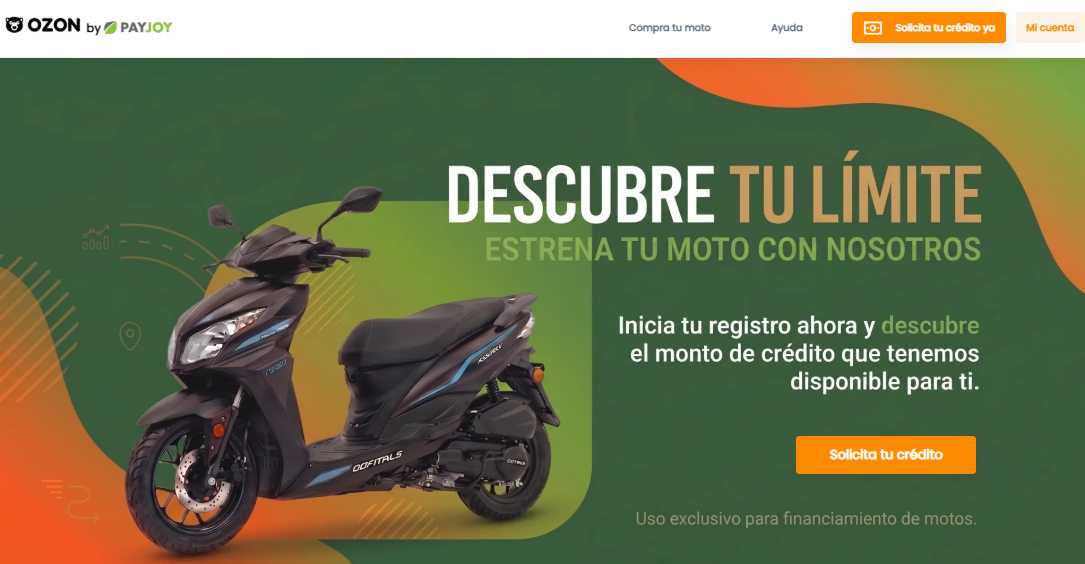
OZON: purchasing new or used motorcycles on credit in Mexico City
For an electric motorcycle offer, riders need the purchase or rental payment, any separate battery-service fee and the available service area presented together. The motorcycle must be affordable to acquire and practical to keep running throughout a delivery shift.
Auteco works with Rappi and Crediorbe on motorcycle access for individual riders, including financing and certain rent-to-own options. Its separate Renting Bancolombia partnership serves enterprise customers.
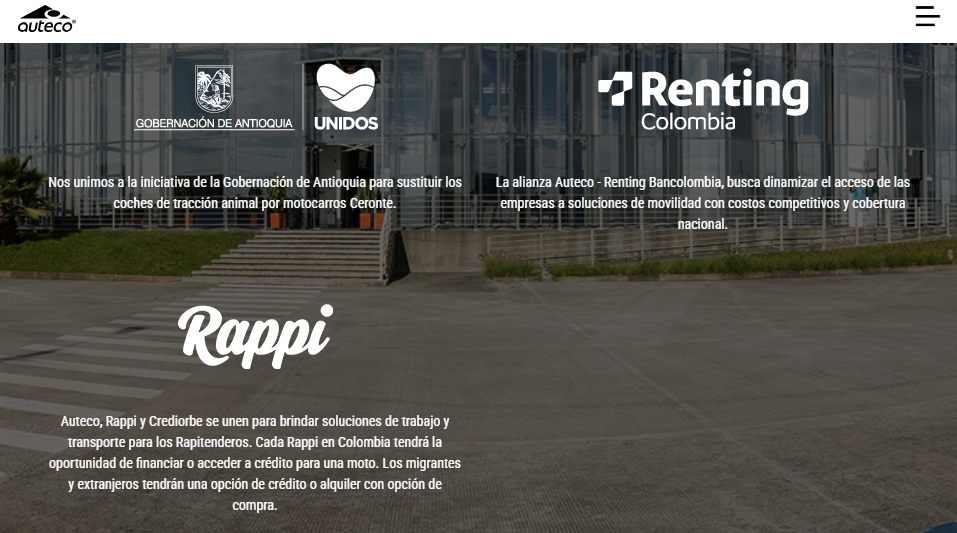
Auteco: Auteco–Renting Bancolombia alliance and Auteco's partnership with Rappi and Crediorbe
Individual financing and business rental place the payment obligations with different customers. A rider buying a motorcycle needs to understand the installment and continuing energy cost. A business renting several motorcycles needs to define whether battery access is included in the rental agreement or billed separately. Either model requires clear responsibility for the motorcycles, batteries and recurring charges.
Rappi Turbo operates locations across Lima, including Chorrillos. In early 2026, a pilot at a Turbo station in Chorrillos introduced electric motorcycles and battery swapping. The expansion plan included swapping infrastructure, service facilities and 500 rider places proposed for 2026.
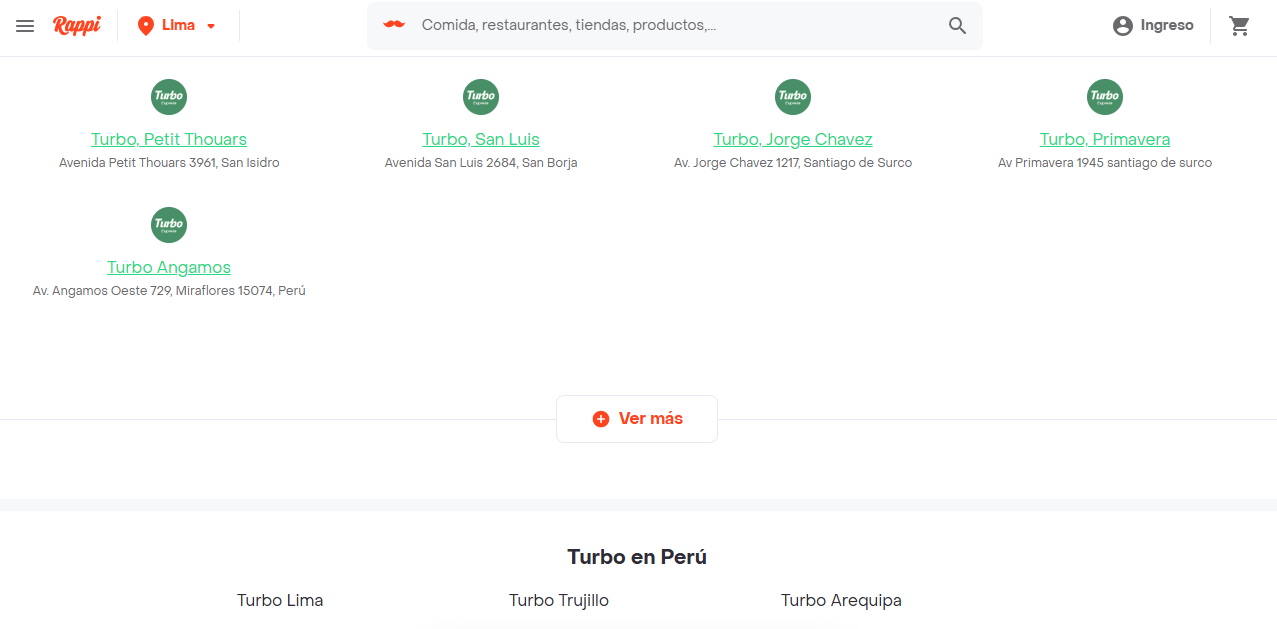
Rappi Turbo: store locations in Lima and other cities in Peru
For a hub-based electric fleet, dispatch hours and rider return patterns can guide battery-service planning. The operator needs charged batteries available before busy periods and swap locations that riders can reach without leaving their delivery area. Existing motorcycle and energy contracts must also be considered before introducing another system.
Motorcycle replacement provides a separate route to riders in Lima. Galgo's Credilunes events at Casa Rappi Surco combined motorcycle models with financing advice for Rappi riders buying or replacing their motorcycles. An electric offer introduced at purchase needs its energy price, service coverage and maintenance arrangements ready alongside the motorcycle.
PedidosYa is pursuing electric-mobility pilots in Chile, Ecuador, Panama and Bolivia. These initiatives are an early signal for motorcycle electrification, rather than a basis for estimating a motorcycle order. A motorcycle-specific project still needs a defined fleet, suitable models and a working area before battery capacity or swapping equipment can be selected.
PedidosYa: electric mobility pilots in Chile, Ecuador, Panama and Bolivia
Restaurant delivery can spread riders across many collection points. A hub-based operation starts from fixed dispatch locations. Swapping sites need to follow those working patterns: a cabinet near a delivery hub may serve one concentrated fleet, while independent riders may need access across several restaurant districts.
Before planning a service, establish:
The number of motorcycles active in the service area.
Shift length and distance travelled.
Access to charging at home or between shifts.
Suitable swapping locations along regular routes.
Restrictions under existing motorcycle or battery-service contracts.
Compare battery swapping with the charging arrangement riders already use. Include charging time, travel to the swap location and charged-battery availability during delivery peaks. A short battery exchange offers limited benefit if reaching the station adds a long detour.
Compatibility requires a review of the motorcycle, battery and cabinet together. Battery dimensions, locking, connectors, communications and current requirements all matter. Gasoline motorcycles represent a replacement-purchase opportunity; existing electric motorcycles need model-specific assessment before entering a swapping network.
With the city, motorcycle models and first rider group defined, our Latin America battery-swapping feasibility guide covers the next-stage operating assessment.
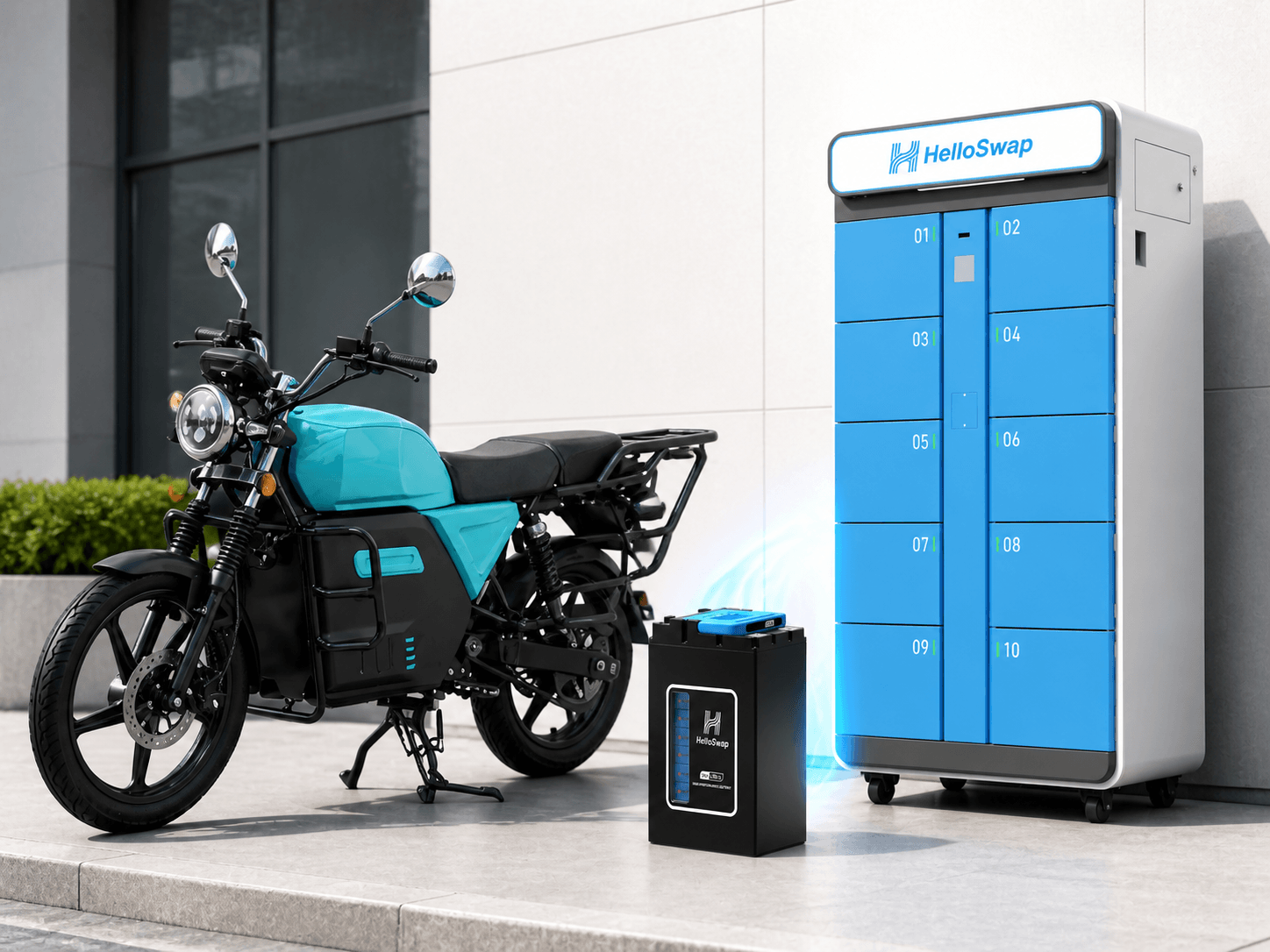
At HelloSwap, we provide electric two-wheeler batteries, swapping cabinets, rider applications and operating software, together with deployment and operational support. We assess suitable electric motorcycle models for adaptation and can help coordinate compatible motorcycle options for partners that need a supply source.
Our project review covers the proposed motorcycles, battery configuration, working area and local installation requirements. The local battery-swapping partner guide explains how motorcycle supply, swapping operations and rider support can be assigned.
Contact us to discuss a delivery motorcycle project in Latin America. Share your target city, the motorcycles or rider network you manage, and any existing charging or battery-service arrangement.
Contact Us
Location
2F, Building 1, No.898 XiuWen Road, MinHang District, Shanghai, China
Copyright © 2024 福建宁德惠智无限科技有限公司 All Rights Reserved. 闽ICP备2023025900号-3.


