
Electric Two-Wheeler Fleet Procurement Checklist for Delivery Operators
2026-10-30
A rider reaches a battery swap station between deliveries, but the packs are still charging. The cabinet is working; the rider cannot continue. A battery availability service-level agreement (SLA) should define the service promised to the fleet and what happens when it falls short. At HelloSwap, we help partners plan motorcycle and scooter supply, battery swapping equipment and operating software around their routes, working hours and battery requirements.
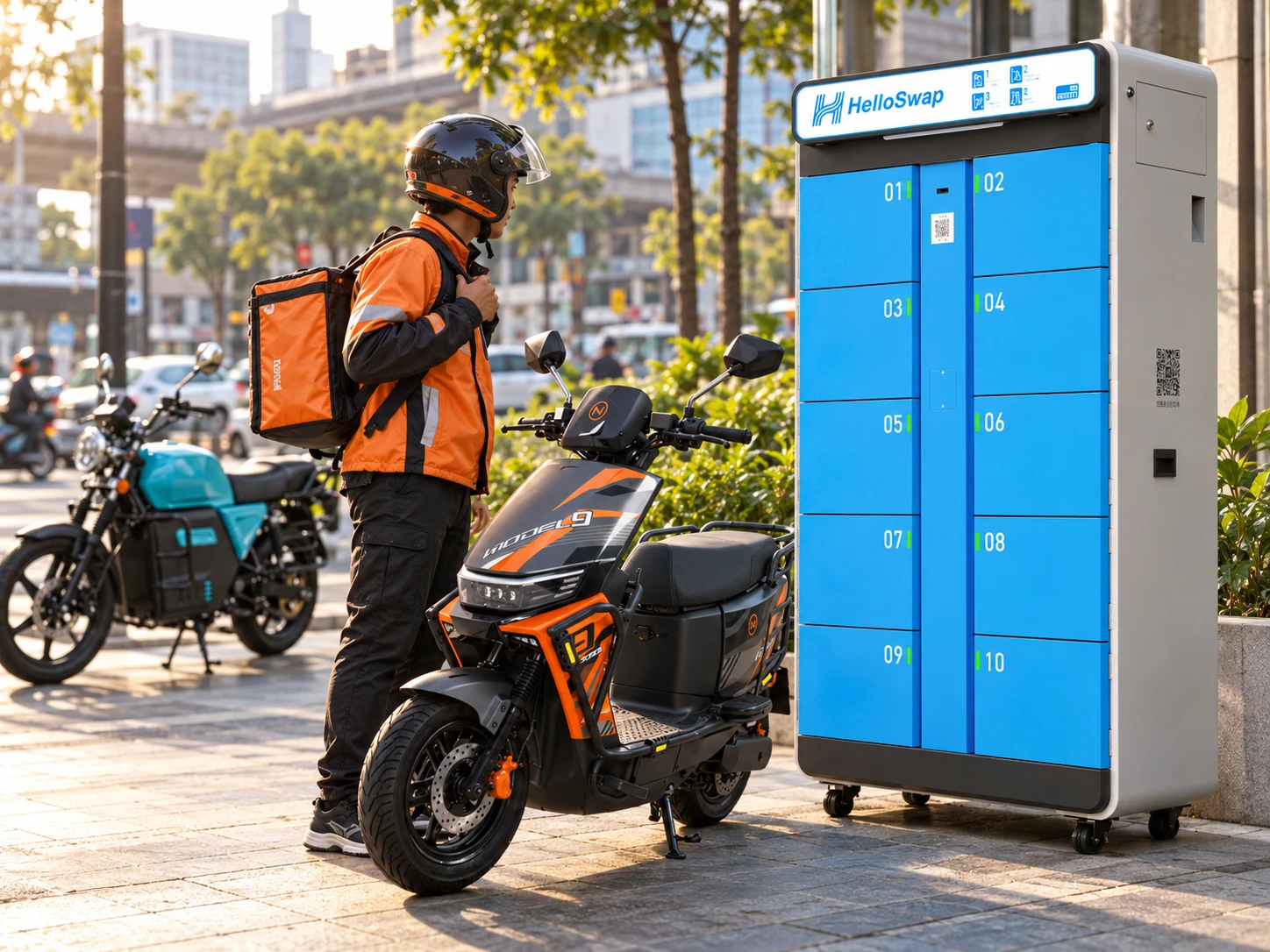
For your fleet, "available" means that the complete compatible battery set is ready to be allocated to a rider covered by the agreement when an exchange is requested. Each pack must:
Match the motorcycle or scooter's approved battery specification.
Meet the agreed minimum state-of-charge (SOC).
Satisfy the applicable safety and temperature conditions.
Be available under the rider's service plan and reservation rules.
A two-pack motorcycle needs a complete compatible set. Batteries still charging, awaiting inspection or reserved for another group do not satisfy the request. The SLA should name the stations, service hours and rider groups to which this definition applies.
The calculation covers riders entitled to the service who request a supported battery type at a covered station during agreed hours. Repeated scans during one exchange count as one request.
A valid rider rejected because of an account-system fault still counts. A rider whose plan genuinely does not cover that station or battery type can be excluded, with the reason recorded.
Suitable batteries may be ready while a door fault or failed return check prevents collection. Measuring both readiness and completion helps the fleet distinguish a stock shortage from a problem with the exchange process.
Measure | Calculation | Question answered |
Request-start battery availability | Requests with the required batteries ready at the start ÷ eligible requests with verified inventory at the start | Were suitable batteries ready when requested? |
Completion within the agreed time | Eligible requests completed within the time limit ÷ all recorded eligible requests | Did riders receive service on time? |
Stockout duration | Total shortage minutes and longest continuous shortage, by station and battery type | How long did shortages last? |
The first two ratios are expressed as percentages. Failed and abandoned exchanges remain in the completion calculation.
Stockout duration is measured during the agreed service hours. The operator should state how often inventory is checked and flag any monitoring gaps. Without observations, the report cannot establish exactly when stock ran out or became available again.
The SLA should state whether swap time starts when the rider arrives or when the rider first scans at the cabinet. It ends when the rider has collected the complete required battery set. Waiting, authorization, battery return and collection after the chosen start point count toward the total.
For example, a rider arrives at 12:00, scans at 12:03 and collects the batteries at 12:05. The exchange takes five minutes when measured from arrival, or two minutes when measured from scanning. A scan-based report leaves out the three-minute queue. Arrival-based measurement requires a separate arrival record.
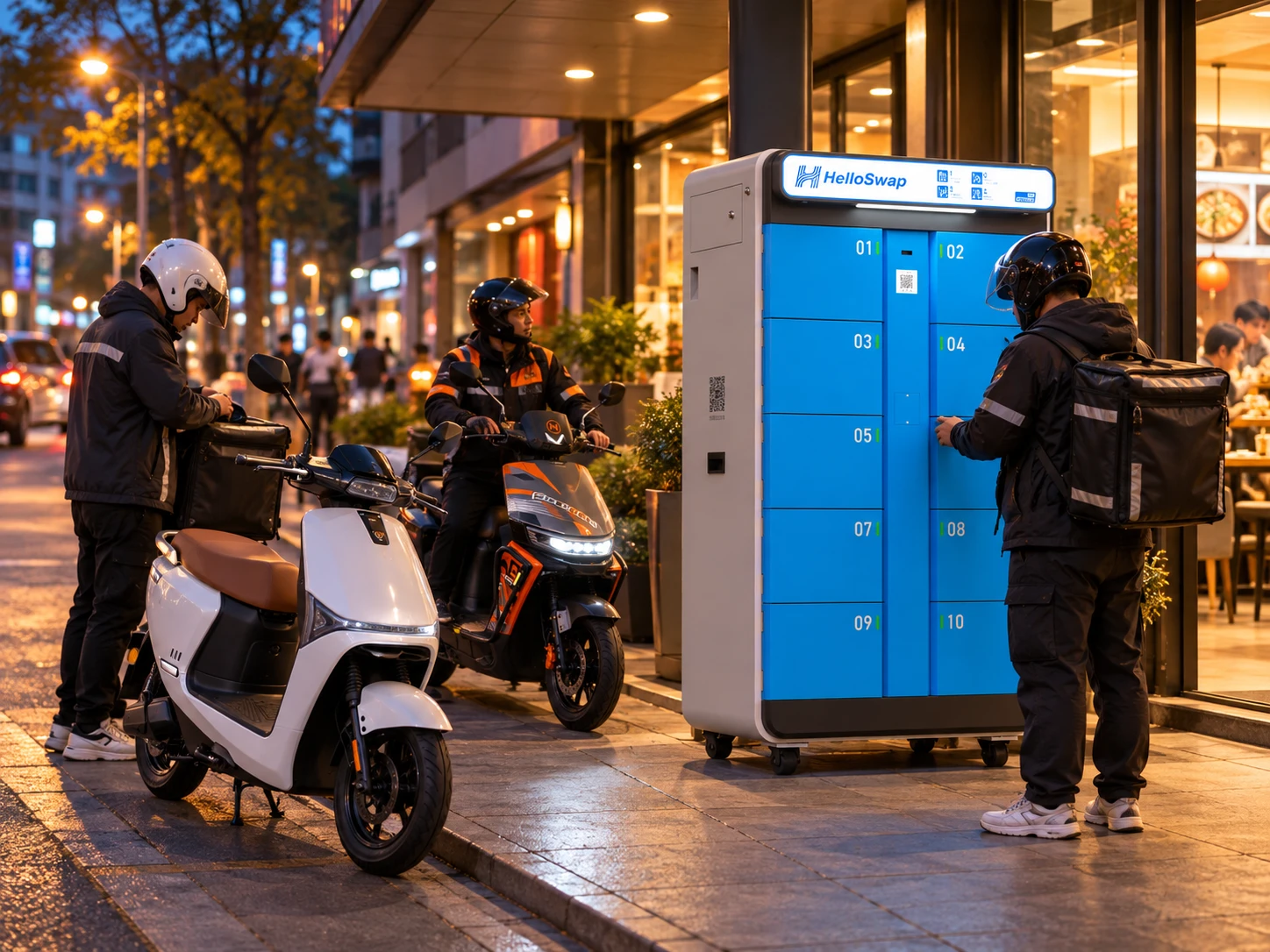
A fleet working mainly during the dinner peak needs results for that shift, not just a monthly average. The reporting window should match the fleet's working hours and stay consistent from month to month.
For example, a monthly report could show:
Operating window | Requests with known starting inventory | Requests with the required batteries ready | Availability |
Off-peak | 800 | 792 | 99.0% |
Dinner peak | 200 | 180 | 90.0% |
Combined | 1,000 | 972 | 97.2% |
The dinner-shift fleet would need to assess the 90% result when comparing the service with its requirements. Station-level results would then show whether shortages occurred across the network or at a few busy locations.
A useful report separates performance by:
Station and compatible battery type.
Hour or working shift, using local time.
Rider group where service plans or access rights differ.
Request count and data coverage.
Each station's request count should accompany its availability percentage. Network totals are based on those request counts, while stations with no eligible requests are marked N/A.
A rider's report of "no battery" may describe several different problems:
What happened | Evidence needed | Issue to investigate |
No complete compatible battery set was ready | Inventory at request time and battery type | Charging, allocation or replenishment |
Ready batteries could not be collected, or the depleted pack could not be returned | Cabinet and return-check records | Exchange equipment or process |
A valid rider account was rejected | Service entitlement and authorization records | Account or access-system fault |
The station could not be entered during covered hours | Opening commitment and site-access report | Site availability |
Safety isolation reduced usable stock | Alert, isolation period and replacement provision | Safe recovery and service continuity |
Each incident needs a recorded time, station, affected requests, responsible contact and resolution.
Safety restrictions remain in place throughout an incident. The resulting shortage or delay is recorded, while the agreement determines responsibility. Power and connectivity failures also require evidence and agreed treatment rather than automatic exclusion.
The records should link the original attempt to the alternative exchange, showing the additional time and detour. Recovery is assessed against the limits agreed with the fleet. A successful exchange elsewhere does not remove the original station failure from its report.
Completed orders alone cannot show every rider's experience. A rider who could not authorize an exchange or open a cabinet may never generate a completed transaction.
The operator should be able to connect each recorded request with:
The rider's service entitlement.
The station, battery type and required pack quantity.
Inventory at the request time.
Completion, abandonment or timeout.
Any related fault or support incident.
Late uploads and duplicate entries should be resolved before reporting. Any result that cannot be verified remains marked unknown. The SLA should define how missing records are reviewed and the minimum data completeness required to assess performance.
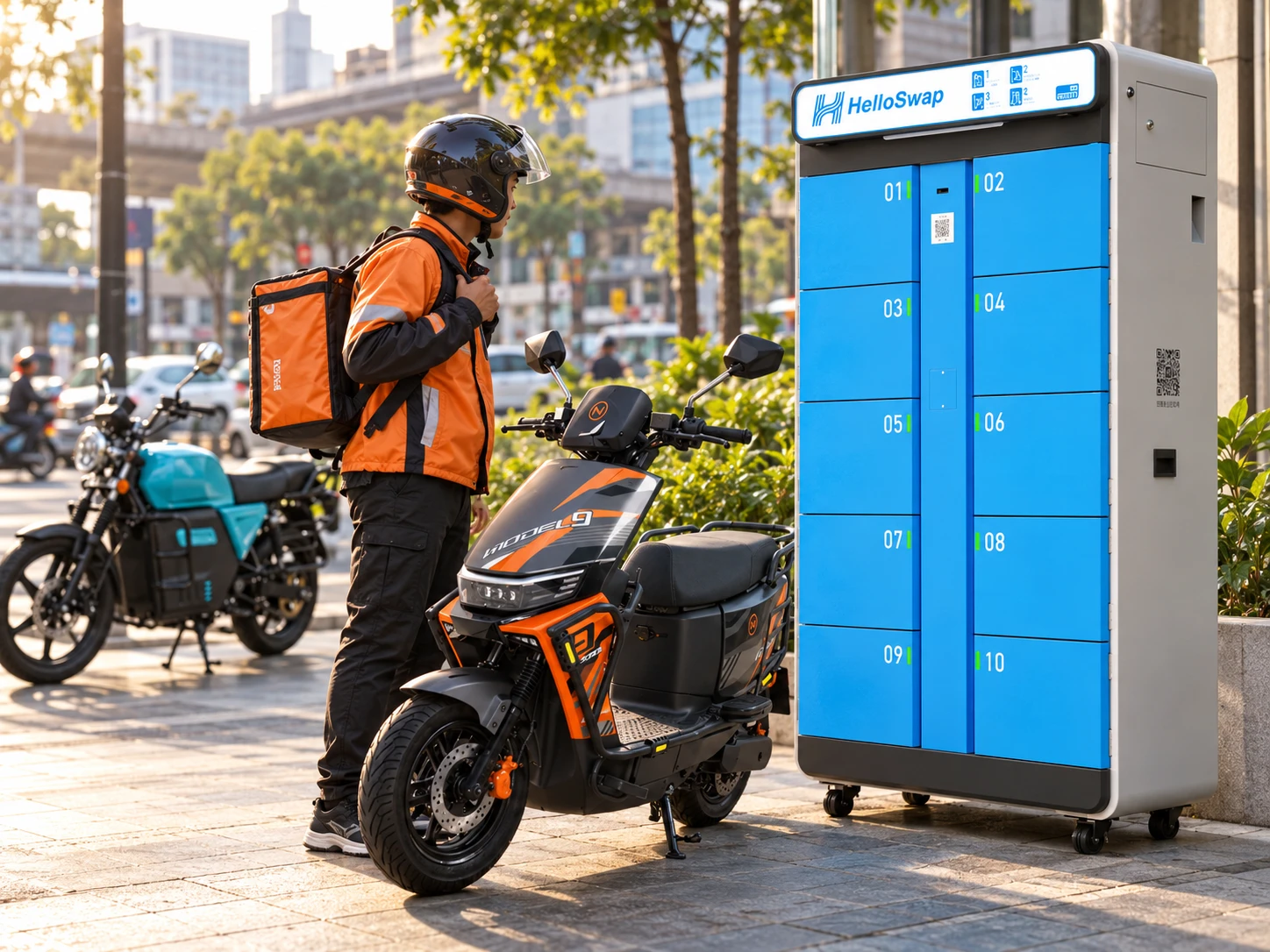
Before accepting a target, the fleet should review peak-shift records for shortages, delays and recovery times. For a new network, a pilot can provide this evidence.
The agreement should cover:
Service scope: stations, hours, rider groups, battery types and planned maintenance.
Performance commitments: availability, completion time and any separate peak or station targets.
Reporting: calculation rules, reporting periods, evidence requirements and corrections.
Incident responsibilities: acknowledgement, alternative service, restoration and permanent repair.
Review and remedies: exclusions, dispute deadlines, escalation and agreed commercial remedies.
Acknowledging a fault and restoring service are separate commitments. Rerouting may provide temporary cover while repairs to the original station remain outstanding. The agreement should identify who handles each stage and who coordinates incidents involving the fleet, operator, site host and technology supplier.
Reports should retain the original service results alongside any figures adjusted for contractual exclusions, with the reasons visible to both parties.
HelloSwap supplies electric two-wheelers, compatible batteries, smart battery swap cabinets and operating software, with support for motorcycle and scooter sourcing or adaptation. Our battery swapping operating software connects service activity with asset and account records through the rider app, maintenance app and operations console.
Contact HelloSwap to discuss a two-wheeler fleet and battery swapping deployment. Please include your market, fleet size, motorcycle or scooter models, peak shifts and planned service area.
Contact Us
Location
2F, Building 1, No.898 XiuWen Road, MinHang District, Shanghai, China
Copyright © 2024 福建宁德惠智无限科技有限公司 All Rights Reserved. 闽ICP备2023025900号-3.


